
How Tokenization Creates New Ownership Models for Large Real Estate Projects
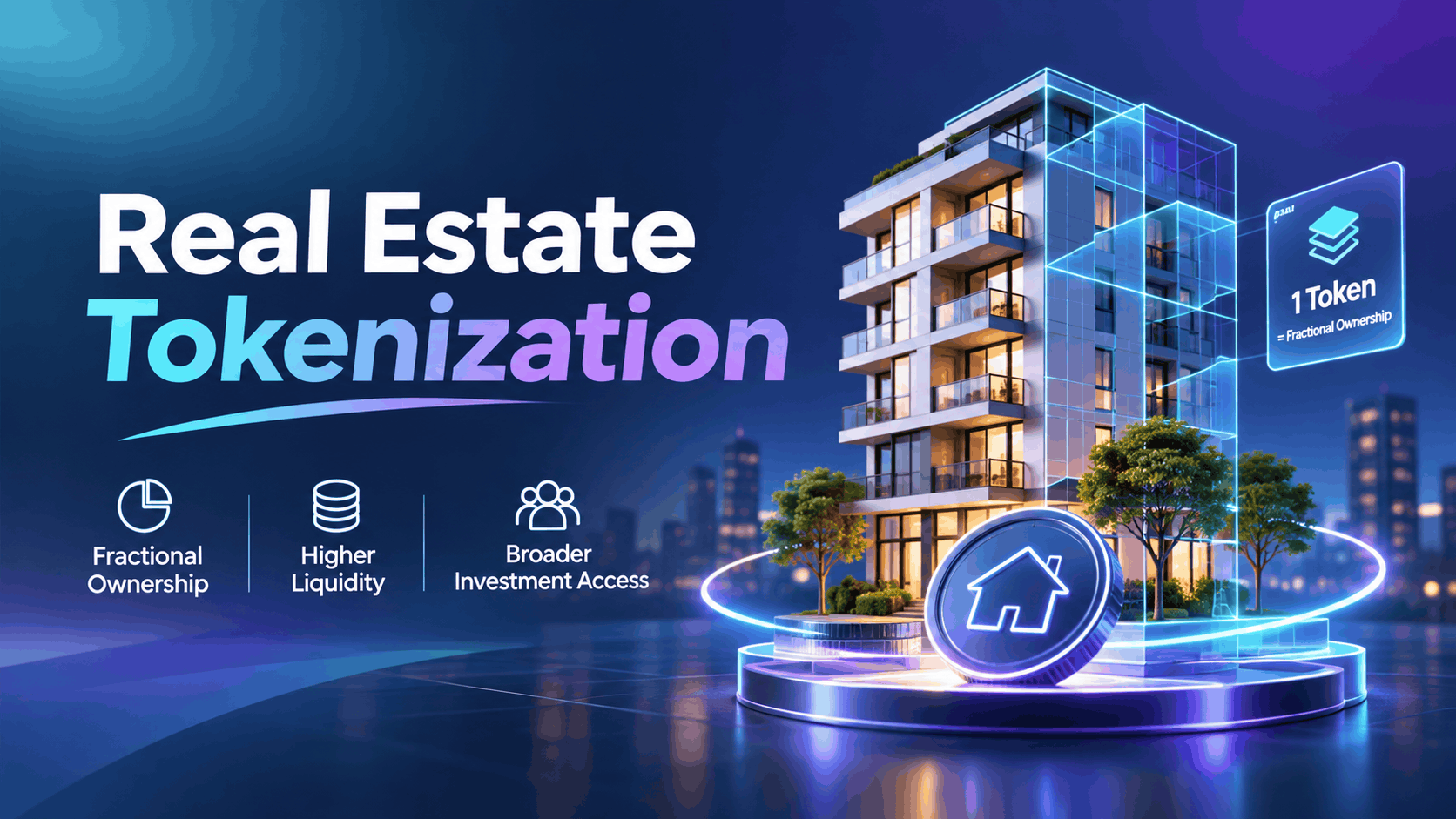
Large real estate projects often require substantial capital, long-term financial commitments, and complex ownership arrangements. Developing commercial buildings, residential communities, industrial parks, mixed-use properties, and large infrastructure projects can involve significant investment that may be difficult to secure through traditional funding structures. Conventional real estate ownership models also limit participation to a relatively small group of investors, institutions, or high-net-worth individuals.
Real estate tokenization is creating new opportunities to address these challenges by converting property ownership interests, investment rights, or financial claims into digital tokens on a blockchain. Instead of depending entirely on traditional ownership structures, developers and asset owners can introduce flexible investment models that allow multiple investors to participate in large-scale property projects.
Through tokenization, real estate businesses can explore fractional ownership, shared investment structures, project-specific investment opportunities, and digital asset management. These models can make large property developments more accessible to investors while giving developers additional options for raising capital and managing ownership throughout the project lifecycle.
Understanding Real Estate Tokenization in Large Property Developments
Real estate tokenization involves representing legally defined property ownership interests, financial claims, or contractual rights through blockchain-based digital tokens. Each token represents specific rights connected to an underlying property or investment structure.
For large real estate projects, tokenization can support ownership arrangements that go beyond conventional property investment. Rather than requiring one investor or a small investment group to finance an entire development, project owners can structure investment opportunities around different portions of the asset.
For example, a commercial development worth $100 million could be organized through a legally structured investment vehicle. The ownership interests or investment rights associated with that vehicle could then be represented by digital tokens, subject to applicable securities and property regulations.
Investors can acquire eligible portions of the offering without purchasing the entire property. Meanwhile, developers can manage investor allocations, ownership records, distributions, and relevant transactions through blockchain-based infrastructure.
This approach creates opportunities for more flexible ownership arrangements without requiring the physical property itself to be divided.
New Ownership Models Emerging Through Real Estate Tokenization
Tokenization is expanding the ways developers can structure ownership and investment participation in large property projects. Several models are becoming particularly relevant.
Fractional Ownership for Large Real Estate Assets
Fractional ownership allows multiple investors to participate in a property through smaller investment interests rather than purchasing the entire asset.
Traditionally, acquiring a large commercial building, residential complex, or industrial property requires substantial financial resources. This creates barriers for investors who want exposure to high-value real estate but cannot commit significant capital.
Tokenization can divide eligible ownership interests into smaller digital units, allowing developers to establish investment structures with different participation levels.
For example, a large residential development could be structured with 10,000 tokens representing defined economic interests in the investment vehicle that owns the project. Investors could purchase tokens according to the offering terms and their investment capacity.
This model can help developers expand their potential investor base while creating more accessible participation opportunities.
Project-Based Ownership Structures
Large real estate developments often involve multiple construction phases, financing requirements, and investment milestones. A single ownership arrangement may not always provide the flexibility needed to manage these different stages.
Tokenization enables developers to create project-specific investment structures where each development can have its own ownership framework.
For instance, a real estate company developing a residential community, shopping complex, and commercial office building could establish separate investment vehicles for each project. Each vehicle could issue tokens representing defined ownership or financial interests.
Investors could choose which development they want to participate in rather than investing in the developer's entire property portfolio.
This structure also helps asset owners maintain clearer financial separation between individual developments.
Shared Ownership Between Developers and Investors
Another emerging model involves shared ownership between property developers and external investors.
Under conventional arrangements, developers may rely on bank financing, private equity, or institutional funding to finance large developments. These options can involve restrictive conditions, significant repayment obligations, or complex negotiations.
Tokenization can support alternative capital structures in which developers retain a defined ownership interest while offering eligible investors participation in the remaining investment structure.
For example, a developer could retain 40% of the economic interest in a commercial project while making the remaining 60% available to investors through a legally structured token offering.
This arrangement allows developers to maintain involvement in the project while accessing additional investment capital.
The actual rights, voting powers, profit distributions, and transfer conditions must be clearly established in the underlying legal agreements.
Revenue-Sharing Ownership Models
Not every real estate investor is interested in owning a portion of a property's overall equity. Some may prefer exposure to the income generated by a property.
Tokenization can support investment structures connected to specific revenue streams, including rental income, commercial leasing, hospitality operations, and other contractual cash flows.
For example, a hotel development could offer tokens representing eligible economic claims on a defined portion of its operating revenue.
Similarly, a commercial property owner could structure an investment around rental income generated by multiple leased spaces.
These arrangements allow businesses to explore investment products connected to property performance without necessarily transferring direct ownership of the underlying real estate.
Multi-Property Portfolio Ownership
Large real estate companies frequently manage multiple properties across different locations and asset categories. Managing investment participation separately for every property can create administrative complexity.
Tokenization can support portfolio-based ownership structures in which investors gain exposure to a collection of properties through a single investment vehicle.
For example, a real estate portfolio containing office buildings, residential communities, warehouses, and retail properties could be organized under a legally structured entity. Tokens could represent defined interests in that entity.
This model gives investors an opportunity to participate in a diversified property portfolio rather than selecting and acquiring individual properties.
It can also help developers introduce new investment opportunities based on different property categories and portfolio strategies.
How Tokenization Supports Large-Scale Real Estate Financing
Financing is one of the biggest challenges in large property development. Developers must secure capital for land acquisition, construction, infrastructure, approvals, marketing, and ongoing operations.
Traditional funding sources may not always provide the required flexibility, particularly for projects involving substantial investment and extended development timelines.
Tokenization introduces another approach to capital formation by allowing developers to structure digital investment offerings connected to real estate assets.
Expanding Investor Participation
Developers can potentially reach a broader group of eligible investors through digital investment infrastructure. Depending on the offering structure and applicable regulations, participation can extend across different investor categories and geographical markets.
Creating Multiple Funding Opportunities
Instead of raising the entire project capital through one funding arrangement, developers can structure separate investment opportunities around different properties, development phases, or financial interests.
Reducing Ownership Administration
Blockchain-based ownership records can help organize token allocations, investor balances, and transaction histories. Smart contracts can also automate certain administrative processes according to predefined conditions.
Supporting Alternative Capital Structures
Developers can explore equity-based, debt-based, and revenue-linked investment structures depending on the project's financial requirements and legal framework.
Together, these capabilities can create additional financing opportunities for large real estate developments.
Tokenization Across Different Types of Large Real Estate Projects
The potential applications of tokenization extend beyond individual residential properties. Large-scale developments involving multiple assets, tenants, and revenue sources can also benefit from flexible investment structures.
Commercial Real Estate Developments
Commercial developments such as office complexes, business parks, shopping centers, and retail destinations require considerable investment.
Tokenization can help developers introduce fractional investment interests connected to these assets. Investors may receive defined economic rights associated with rental income, property appreciation, or other agreed financial arrangements.
Residential Communities and Housing Projects
Large residential communities involve multiple buildings, residential units, shared facilities, and infrastructure.
Developers can establish investment structures around an entire residential development or specific phases of construction. This can create opportunities for investors to participate in projects without purchasing individual apartments or houses.
Industrial Parks and Warehousing Facilities
Industrial parks, logistics centers, and warehouse facilities often generate income through long-term leasing agreements.
Tokenization can represent defined interests in these properties or contractual income streams, allowing developers to explore investment models connected to industrial real estate.
Mixed-Use Real Estate Developments
Mixed-use developments combine residential, commercial, retail, hospitality, and entertainment spaces within a single project.
Their multiple revenue sources and property categories create opportunities for more customized ownership structures. Developers could establish separate investment interests for different components or organize them under a unified portfolio structure.
Hospitality and Hotel Projects
Hotels and hospitality developments require substantial capital for construction, operations, and expansion.
Tokenization can support investment arrangements linked to hotel ownership interests, rental income, or defined operating revenue claims. This creates additional options for hospitality businesses seeking capital beyond conventional financing.
The Role of Smart Contracts in Managing Digital Ownership
Smart contracts are an important part of tokenized real estate ownership models. They are blockchain-based programs that execute predefined instructions when specified conditions are satisfied.
In large real estate projects, smart contracts can support several ownership and investment management activities.
-
Token issuance: Create digital tokens representing legally defined investment interests.
-
Ownership tracking: Maintain records of token balances and eligible ownership transfers.
-
Income distribution: Automate eligible rental income or other financial distributions according to predefined rules.
-
Investor eligibility: Apply transfer restrictions and investor qualification requirements.
-
Transaction management: Execute permitted token transfers based on established conditions.
-
Voting mechanisms: Support investor voting when governance rights are included in the legal structure.
These capabilities can reduce certain manual administrative processes and improve the consistency of investment management.
However, smart contracts do not independently establish legal ownership of physical property. The relationship between digital tokens and enforceable legal rights must be supported by appropriate documentation and legal arrangements.
Regulatory and Legal Considerations in Tokenized Real Estate Ownership
Creating new ownership models requires more than issuing blockchain tokens. Developers must establish a clear legal connection between the digital tokens and the underlying property or investment rights.
Depending on the jurisdiction and offering structure, tokenized real estate interests may be classified as securities or other regulated financial products.
Important considerations include:
Legal Ownership Structure: Developers must determine whether tokens represent direct property interests, shares in a special purpose vehicle (SPV), debt instruments, or contractual financial claims.
Regulatory Compliance: Token offerings must follow applicable securities, real estate, investor protection, and financial regulations.
Investor Verification: Know Your Customer (KYC) and Anti-Money Laundering (AML) procedures may be required to verify participants.
Transfer Restrictions: Digital ownership transfers must comply with legal eligibility requirements and any restrictions attached to the investment.
Property Documentation: Ownership records, valuation reports, title documents, financial agreements, and relevant property approvals should be properly maintained.
Investor Rights: Distribution entitlements, voting rights, redemption conditions, and exit mechanisms must be clearly defined.
A well-designed tokenization structure connects blockchain infrastructure with enforceable legal rights rather than treating tokens as independent proof of property ownership.
Building a Real Estate Tokenization Solution for Large Projects
Developers planning to introduce tokenization into large real estate projects need infrastructure that can support complex ownership structures and investment operations.
A dedicated real estate tokenization solution can bring together several essential components.
-
Property and Asset Management: Manage property information, ownership structures, valuation details, and project documentation.
-
Tokenization Infrastructure: Create and manage digital tokens representing defined ownership or investment interests.
-
Investor Management: Provide investor onboarding, verification, account management, and investment tracking.
-
Smart Contract Development: Implement token issuance, transfer restrictions, distribution logic, and other predefined operations.
-
Payment Integration: Support eligible investment payments and financial transactions through integrated payment infrastructure.
-
Compliance Management: Incorporate investor verification, transaction monitoring, and applicable regulatory requirements.
-
Reporting and Analytics: Provide visibility into investor participation, token distribution, project performance, and relevant financial information.
Businesses looking to establish these capabilities can work with a Real Estate Tokenization Development Company to build infrastructure aligned with their asset structure, investment model, and operational requirements.
Development teams such as INORU, which specialize in tokenization solutions, can support businesses in exploring blockchain-based systems for real estate ownership, investment management, and digital asset operations.
The Future of Ownership Models for Large Real Estate Projects
The future of large-scale real estate investment may involve a combination of traditional ownership structures and blockchain-based financial infrastructure.
As tokenization develops, property businesses may explore more customized investment arrangements based on asset type, project size, revenue potential, and investor requirements.
Developers could introduce investment opportunities connected to individual construction phases, commercial leasing portfolios, hospitality operations, infrastructure assets, and multiple-property developments.
Institutional investors may also explore tokenized real estate interests as part of broader digital asset investment strategies, provided that legal, operational, and regulatory requirements are satisfied.
Another important development is the potential integration of tokenized real estate with digital financial infrastructure. This could support more efficient investor reporting, automated distributions, and compliant secondary transfers where permitted.
However, the long-term success of these models will depend on legal enforceability, asset quality, transparent reporting, investor protection, and reliable technology.
Conclusion
Real estate tokenization is creating new possibilities for structuring ownership and investment participation in large property developments. Through fractional ownership, project-specific investment structures, shared ownership, revenue-linked interests, and portfolio-based models, developers can explore alternatives to conventional real estate financing and ownership arrangements.
These approaches can help businesses attract eligible investors, organize complex investment structures, and manage digital ownership records more efficiently. At the same time, successful implementation requires a strong connection between legal ownership rights, regulatory compliance, and blockchain infrastructure.
For real estate businesses planning large-scale developments, tokenization represents an opportunity to rethink how properties are financed, managed, and offered as investment opportunities.

 Polish
 Arabic
 French
 Spanish
 Portuguese
 Deutsch
 Turkish
 Dutch
 Italiano
 Russian
 Romaian
 Portuguese (Brazil)
 Greek