
4K Moto Vlogging Cameras: Are They Worth It for Motorcycle Creators?
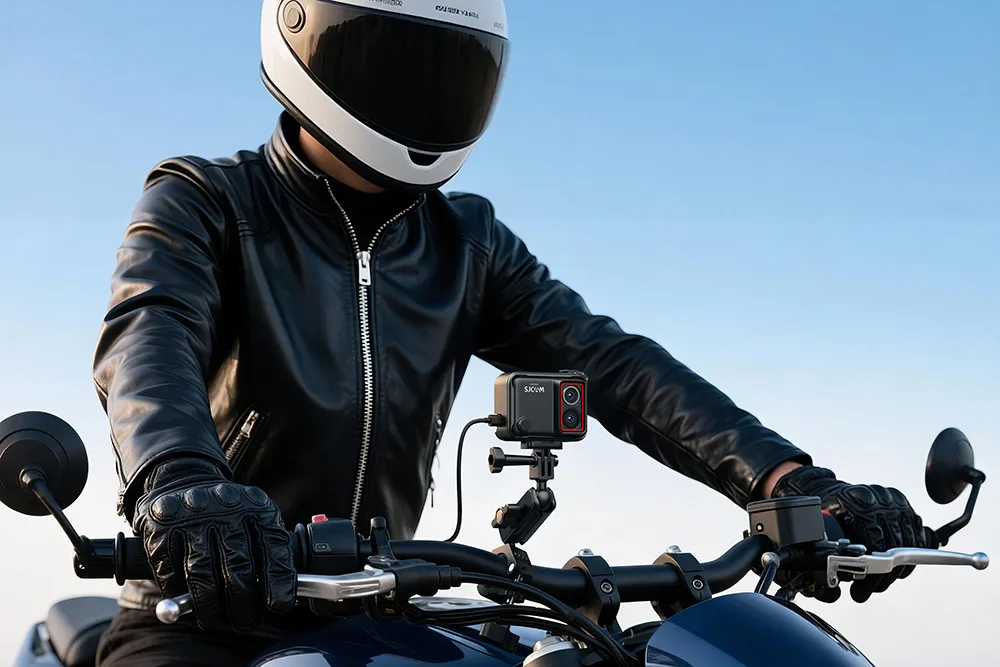
Resolution is one of the first specifications riders notice when shopping for a moto vlogging camera. Manufacturers push 4K as a headline feature, and it’s easy to assume that higher resolution automatically means better videos. But for motorcycle creators, the decision is more nuanced. A 4K camera can deliver sharper footage, more editing flexibility, and a more professional final product—but it also brings larger files, heavier processing demands, and potential trade-offs in battery life and low-light performance. So are 4K moto vlogging cameras actually worth it? For many creators, yes—but only if you understand what 4K does well and where it falls short.
What 4K Actually Gives Moto Vloggers
The most obvious benefit of 4K is detail. A 4K image contains four times as many pixels as 1080p, which means finer textures in the road surface, sharper scenery, and clearer facial expressions when you’re talking to the camera. For moto vlogging, that extra detail can make a real difference. Helmet-mounted footage often includes a lot of visual information—sky, road, background scenery, and your face—and 4K helps preserve all of it.
More importantly, 4K gives you room to crop. Many creators shoot in 4K but export in 1080p. That lets you punch in, reframe, or stabilize footage without losing much final quality. If your moto vlogging camera is mounted on a handlebar or chest rig and the framing is slightly off, a 4K source clip gives you the freedom to fix it in editing. You can also create closer shots of your face or the road ahead without needing a second camera. For creators who want a polished, cinematic look, this flexibility is a major advantage.
4K is also useful for platform compression. When you upload to YouTube or social media, the platform re-encodes your video. Starting with a higher-resolution source can help your final upload look cleaner, especially in scenes with lots of movement or fine detail. Text overlays, graphics, and zoomed-in product shots also look sharper when they’re built from 4K footage.
The Downsides of Shooting 4K on a Motorcycle
The benefits are real, but so are the costs. 4K files are significantly larger than 1080p files, which means you need more storage on your memory cards and more space on your computer. A long ride can generate hundreds of gigabytes of footage, and transferring and backing up those files takes time. If you’re a casual creator who uploads occasionally, this may not matter much. If you ride and record frequently, storage management becomes a daily concern.
Battery life and heat are other issues. Shooting 4K puts more demand on the camera’s processor, which drains the battery faster and can cause the camera to warm up. On a motorcycle, airflow helps with cooling, but a camera mounted behind a windscreen or inside a helmet can still get hot. Some action cameras limit 4K recording time or reduce performance in high temperatures. For long rides, you may need spare batteries, a power bank, or a lower-resolution mode.
Stabilization is another consideration. Electronic stabilization often crops the image, and in 4K that crop can reduce your effective field of view. Some cameras also struggle with rolling shutter or motion artifacts at high resolution. If your moto vlogging camera is mounted rigidly to the bike, vibration can make 4K footage look jittery unless the stabilization is excellent. In some cases, shooting at 2.7K or 1080p with stronger stabilization produces a more watchable result than 4K with compromises.
Low-light performance is also worth considering. Higher resolution doesn’t always mean better low-light footage. Smaller pixels can produce more noise, and 4K recording in dim conditions may look grainier than 1080p from the same camera. If you ride at dawn, dusk, or at night, test your camera in realistic conditions before assuming 4K is the best choice.
4K vs. 2.7K and 1080p: What Do You Actually Need?
For many motorcycle creators, 2.7K is the sweet spot. It offers more detail than 1080p, leaves some room for cropping, and produces smaller files than 4K. It also tends to be easier on battery life and processing power. If your final videos are primarily for YouTube, 2.7K upscaled to 4K or exported at 1080p can look excellent. If you’re posting short clips to social media, 1080p is often more than enough, especially since many viewers watch on phones.
That said, 4K makes sense if you regularly reframe footage, create zoomed-in shots, or want the highest possible image quality for client work or long-form cinematic vlogs. It’s also a good choice if you plan to keep your footage for years and want it to remain useful as display technology improves. The key is to match resolution to your workflow. Shooting 4K “just because” can create unnecessary work without a visible payoff.
The Factors That Matter More Than Resolution
For moto vlogging, resolution is only one part of image quality. Stabilization, dynamic range, lens quality, frame rate, and audio often matter more. A stabilized 1080p clip with clean voice audio will usually outperform a shaky 4K clip with wind noise. Motorcycle footage is challenging: vibration, speed, changing light, and wind all affect the final result. A moto vlogging camera that handles those challenges well is more valuable than one that simply offers a 4K badge.
Audio deserves special mention. Viewers will forgive slightly soft video, but they won’t forgive muffled speech or roaring wind. If you’re choosing between a 4K camera with poor microphone support and a 2.7K camera with excellent external mic options, the latter is often the better investment for vlogging. Similarly, good stabilization can make 1080p footage look professional, while poor stabilization can make 4K footage unwatchable.
Practical Tips for Shooting 4K on a Motorcycle
If you decide to go the 4K route, a few habits will make the workflow smoother. Use high-quality memory cards rated for sustained write speeds. Carry spare batteries and consider a power solution for long rides. Shoot at frame rates that match your editing needs—30fps is usually fine for cruising and talking-head footage, while 60fps helps with action shots and slow motion. Use a high bitrate if your camera allows it, and avoid digital zoom, which degrades image quality. Finally, plan your storage and backup strategy before your ride, not after.
The Verdict: Are 4K Moto Vlogging Cameras Worth It?
For serious motorcycle creators who edit their footage, reframe shots, and want maximum flexibility, a 4K moto vlogging camera is absolutely worth it. The extra detail and cropping room can elevate the production value of your videos, and the footage will remain useful as platforms and displays improve. For casual riders who want to record their journeys and share them quickly, 2.7K or 1080p may be a smarter choice—especially if it means better battery life, simpler storage, and more reliable stabilization.
The best approach is to think beyond the resolution number. Consider how you ride, how you edit, and what your viewers actually watch on. If 4K fits naturally into that workflow, it’s a worthwhile upgrade. If it adds friction without a clear benefit, you’re better off investing in stabilization, audio, and mounting solutions. After all, the best moto vlogging camera isn’t the one with the biggest spec sheet—it’s the one that helps you tell your story clearly and consistently.

 Polish
 Arabic
 French
 Spanish
 Portuguese
 Deutsch
 Turkish
 Dutch
 Italiano
 Russian
 Romaian
 Portuguese (Brazil)
 Greek