
Roofing Underlayment for Reliable Weather Protection and Enhanced Roof Durability
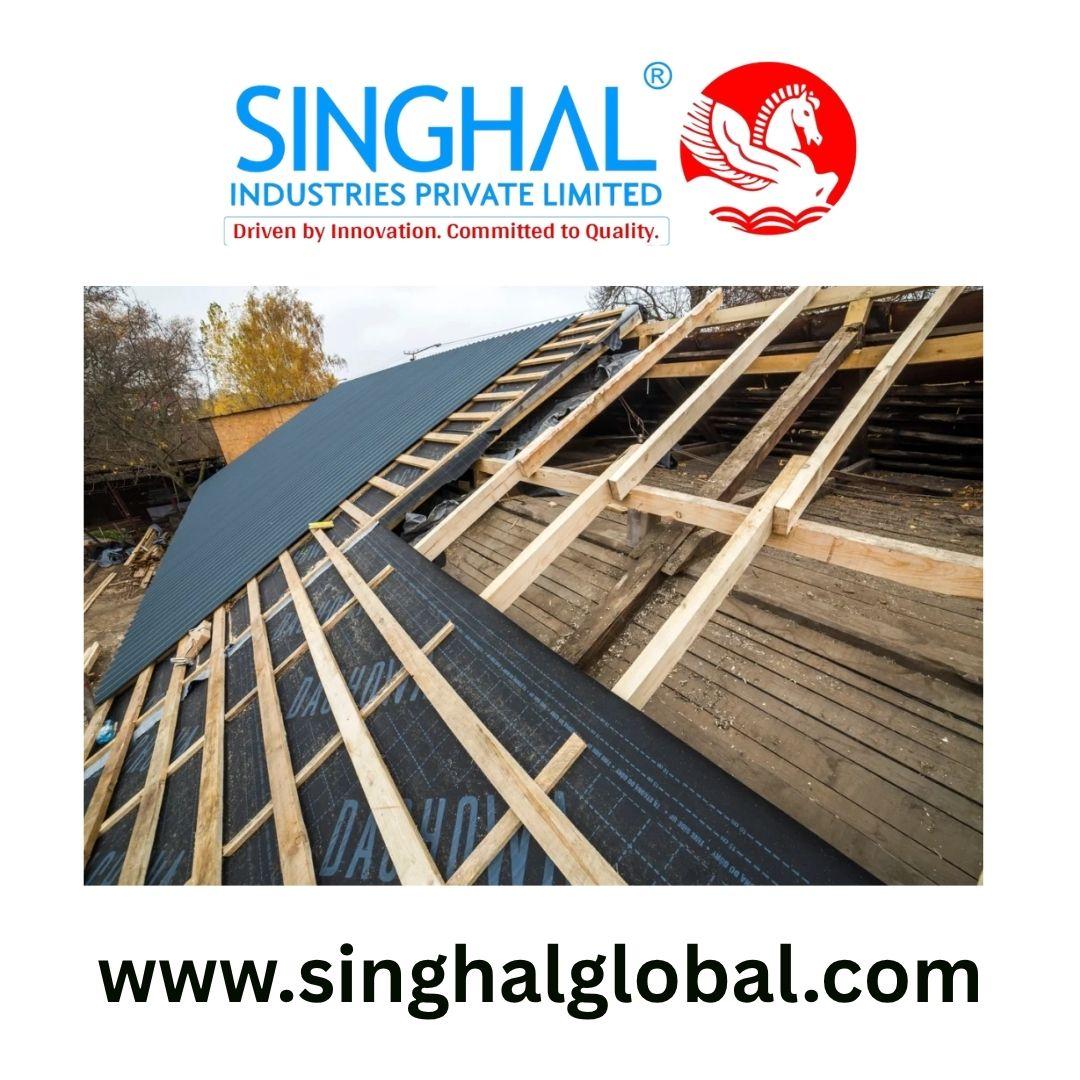
What is Roofing Underlayment and Why is it Important
Roofing Underlayment is installed on top of a roof deck and is covered by the topmost roofing materials. As a barrier between the outside elements and the building, roofing underlayment acts as a sealant to stop water from entering the building. If water does enter the building because of poor sealing or inadequate roofing materials, then roofing underlayment can minimize the water damage.
Due to the extremities of India's climate (high heat, monsoons, high humidity, etc), buildings need to be protected from outside elements. Using roofing underlayment can help protect buildings. Residential and commercial buildings as well as industrial, sheds, and other various structures can use roofing underlayment. Roofing underlayment can also be used while a roof is being renovated or in cases where the roofing materials cannot be used. When roofing underlayment is being considered for a building, the type of roof, other building materials, how the building was constructed, and how the roof was constructed and the climate of the area need to be taken into consideration.
Types of Roofing Underlayment Available
Roofing underlayment can also be classified based on its application. For traditional roofing underlayment products, they can be heavy and difficult to work with. One of the advantages of synthetic underlayment is its light weight, user-friendly nature and its superior tear resistance. Asphalt saturated felt is probably the most common type of roofing underlayment. In recent years, a new adhesive-based, rubberized asphalt product has come onto the market to provide an additional layer of protection. Textured Synthetic Membranes are an alternative to traditional textured membranes, where additional traction is required while installing the membrane. All the mentioned products have a set of limits, based on different exposures, such as type of moisture, mechanical strength, temperature, and duration of exposure.
Roofing Underlayment : Climate and Construction Requirements
Due to the various climatic conditions in India and rapid industrialization, the Roofing Underlayment india industry in India is evolving at a rapid pace. During the monsoon or when it rains, roofing systems must allow the free passage of water, and also keep the interior of the building dry. When using roofing systems in hot climate regions, the roofing materials must be able to withstand the long term effects of heat. Roofing systems in coastal areas must withstand weather and climate conditions such as high humidity, high wind speeds and extreme weather. Dimensional stability of roofing materials is important in addition to the roofing materials being compatible with other roofing products for Northern India where there is a huge variation in temperature during different seasons.
Applications in Residential, Commercial, and Industrial Buildings
A variety of types of building applications (commercial, industrial, agricultural, etc.) utilize underlayments. Some examples of commercial applications may include office buildings, shopping malls, schools, and hotels, to name a few. Underlayments in these types of buildings help prevent moisture damage to the roof deck. Large-scale warehouses and manufacturing plants are examples of industrial applications. When selecting an underlayment for an industrial application, ease of installation and product availability are the major factors, in addition to consistency of the product. For roofing systems with large, flat roof areas, metal roofing systems may be installed over a compatible roofing system and underlayment, as long as the roofing system and the underlayment are designed to work with the particular roofing system and installation method. Moisture problems in agricultural applications may be addressed by an appropriate roofing system for the machinery, storage, and/or work sites. Other factors, in addition to moisture, may be responsible for contributing to moisture problems, such as condensation within a building.
Things to Consider when Selecting a Dependable Roofing Underlayment
Various individuals in the purchase and specification of roofing systems consider several factors when choosing a reliable roofing underlayment manufacturer. These factors include type of material used to manufacture the underlayment, roll dimensions, variations in the thickness of underlayment, type of finish, approved end uses, the consistency and quality of manufacturing and the depth of the quality control process, and the level of testing done by the manufacturer. The factors noted above can heavily influence the decision on which manufacturer to use for a given underlayment application. Some other factors may influence the decision to use a particular manufacturer, which may include, but are not limited to, the supplier's ability to manufacture large volumes the lead time from order placement to delivery and the ability to manufactures specialty items neededs for a particular job.
Improved Installation of Roofing Protection
When evaluating a roof deck to determine load bearing capacity and determining how to prepare the roof deck per the requirements of the membrane manufacturer, is something a contractor would perform prior to installing underlayment. During the installation of various types of membranes, contractor must overlap the membranes a distance specified by the roofing designer to provide a means to direct water away from the seams. The contractor must utilize membrane securing techniques to the extent required to hold membranes in place to minimize the movement during installation. Contractor must give attention to roof valleys, eaves, chimneys, skylights and pipe penetrations, as they provide pathways for water to enter the building. It is the responsibility of the contractor to install required flashing and sealants per the recommendations of the roofing designer.
Initial Costs & Maintenance
Costs for using an underlayment in a roofing system include the first cost to purchase the underlayment and the costs to maintain the roofing system over the lifetime of the underlayment manufacturer. Several factors can affect the costs. The underlayment's suitability for the application should be evaluated, as well as how well the underlayment was installed and the underlayment's performance over time. An appropriate Roofing Underlayment Manufacturer membrane does provide some level of protection to the roof deck from moisture damage. The membrane, however, does not eliminate the need to perform periodic inspections to check for moisture damage. Homeowners should routinely check visible areas of the roof and other areas of the building that may be at risk for water intrusion. Any damage discovered should be repaired. Homeowners should consider the whole life costs of the roofing system when selecting an underlayment for a roofing system. The cost to install the underlayment, the cost to have the underlayment delivered, the warranties for the underlayment, and the anticipated costs to maintain the roofing system over the life of the underlayment should be considered. Price should not be the only consideration.
Conclusion
The majority of roofing systems offer a secondary line of defense against moisture damage with the use of underlayments. Underlayments are installed over the highest or topmost roofing layer and provide a greater level of protection against moisture damage than the roofing system itself. Different types of underlayments are available and their level of protection depends upon the material used, skill and experience of the installer, and several other factors. Underlayments are either in the form of a sheet or roll. Underlayments’ performance also depends on the roof design and the service life expected out of the roof system. The roofing contractor would also consider the design of the roof, the underlayment’s compatibility with other roofing materials, and how long the underlayment will resist moisture.
Frequently Asked Questions (FAQs)
What is roofing underlayment?
An underlayment provides additional protection to the primary roofing material and offers protection against moisture damage. Underlayment also protects vulnerable areas of the roof from damage.
What roofing underlayment works best for Indian weather?
Depending on the climate where you live, the design of your roof, what will be placed on the roof, and the manufacturer’s comments, underlayments, synthetic or others, might work in your situation.
Who is the largest exporter of Roofing Underlayment?
For our potential customers, we can suggest Singhal Industries Private Limited roofing underlayment. But Singhal Industries Private Limited should be checked independently using exported product data and market studies, to determine if they comply with regulations.
What are the factors that helps buyers choose a roofing underlayment manufacturer?
When buyers select a supplier, they have to assess the supplier’s documentation on the quality of the product, suitability of the product for their intended use, and reliability of the process by which the product is made, timeliness of delivery, and conditions of the warranty.
Does roofing underlayment substitute the main roofing material?
In the case of an asphalt roof covering, underlayment serves to protect the roofing material and can be used to cover open seams on roofing materials. The quality of the roofing materials used, the design of the roof, flashing, drainage, the roof installation and maintenance are all important.

 Polish
 English
 Arabic
 Spanish
 Portuguese
 Deutsch
 Turkish
 Dutch
 Italiano
 Russian
 Romaian
 Portuguese (Brazil)
 Greek