
Sigma Gas Tight Door Cost and Standards
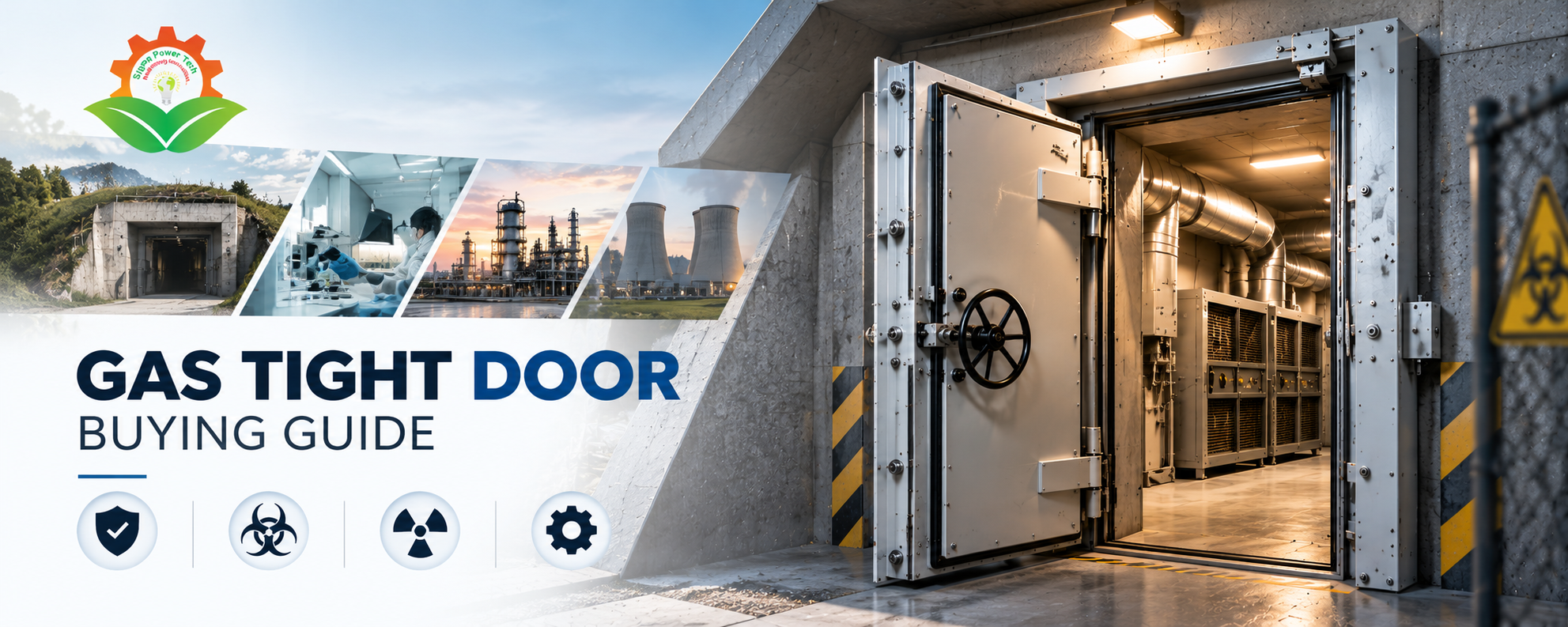
A chemical processing facility carrying out hazardous gas handling suddenly experiences a pressure imbalance after an improperly sealed entry door begins leaking. Within minutes, contaminated air reaches adjacent controlled areas, forcing an emergency shutdown. In facilities such as CBRN shelters, defense bunkers, biological laboratories, and nuclear installations, even minor sealing failures can compromise personnel safety. Choosing the right Gas tight door is therefore a critical engineering decision rather than a standard construction purchase.
Why a Gas Tight Door Matters
A Gas tight door is a specially engineered access system designed to prevent the passage of hazardous gases, toxic chemicals, radioactive contaminants, and biological agents between controlled spaces. Unlike conventional industrial doors, these systems create an airtight barrier capable of maintaining specified pressure differentials required for critical infrastructure.
Whether installed in a Gas tight door for CBRN shelters, pharmaceutical cleanrooms, chemical plants, or underground defense facilities, the door forms an essential part of the overall containment strategy. Its effectiveness depends not only on the door leaf but also on frame engineering, sealing technology, installation accuracy, and ongoing maintenance.
What Is a Gas Tight Door and How Is It Engineered?
The engineering behind a gas-tight assembly focuses on eliminating every potential leakage path.
A typical system incorporates reinforced steel construction, precision-machined frames, heavy-duty hinges, multi-point locking mechanisms, and high-performance compression gasket seals. Once the locking system engages, the door compresses evenly against its sealing surface, producing a continuous airtight barrier.
Modern Gas tight door design also considers structural loading, corrosion resistance, repeated operational cycles, and compatibility with pressure-controlled environments. Every component is manufactured to precise tolerances because even minimal frame distortion can affect sealing performance.
How Pressure Integrity Is Maintained
Many hazardous facilities operate using positive or negative air pressure to control contaminant movement.
Positive pressure prevents contaminated outside air from entering protected shelters, while negative pressure keeps hazardous substances confined within laboratories or chemical processing areas. Gas tight door systems support these pressure conditions by minimizing leakage around the perimeter and maintaining seal compression during operation.
Proper frame anchoring is equally important. The surrounding wall, reinforced concrete opening, and embedded frame must function as a single structural assembly to prevent movement that could compromise airtight performance.
Key Features to Evaluate
Selecting the appropriate system involves much more than comparing dimensions.
Important features include:
- High-performance airtight sealing capability
- Reinforced structural construction
- Compression gasket technology
- Corrosion-resistant materials and coatings
- Pressure differential capability
- Compatibility with blast and fire protection systems
- Security-grade multi-point locking
- Automation compatibility
- Long operational life
- Low maintenance requirements
- Compliance with recognized testing and certification standards
Many facilities integrate gas-tight entrances with blast resistant assemblies, fire-rated barriers, and advanced filtration systems to provide multiple layers of protection.
Sealing Performance and Leakage Testing
The actual performance of a gas-tight system is verified through leakage-rate testing rather than visual inspection.
Testing typically measures air leakage under specified pressure differentials to confirm that the installed assembly satisfies project requirements. International CBRN containment standards and applicable IS/BIS requirements may define acceptable leakage limits depending on the facility type.
Manufacturers also evaluate repeated opening cycles, gasket durability, structural deformation, and hardware performance to ensure long-term reliability.
Certification documentation should always be reviewed before procurement, particularly for mission-critical installations.
Integration with CBRN, Fire, and Security Systems
A gas-tight entrance rarely operates as an independent component.
Modern Gas tight door systems often integrate with:
- CBRN air filtration systems
- Blast protection infrastructure
- Fire-rated compartmentation
- Access control systems
- Emergency locking mechanisms
- Building management systems
- Intrusion detection systems
Automation allows remote operation while maintaining sealing integrity. This capability is especially valuable in military command centers, hazardous laboratories, and restricted industrial facilities.
Where Gas Tight Doors Are Used
Industries requiring controlled environments rely on airtight access systems to protect personnel, equipment, and operations.
Common applications include:
- CBRN shelters and civil defense bunkers
- Military command and communication centers
- Biological containment laboratories
- Pharmaceutical manufacturing facilities
- Chemical research laboratories
- Petrochemical processing plants
- Nuclear power facilities
- Underground infrastructure
- Hazardous material storage areas
- Emergency response control rooms
Demand for reliable Airtight door for hazardous facilities continues to grow as safety regulations become increasingly stringent.
Understanding Gas Tight Door Price
The Gas tight door price varies considerably because every project has different operational requirements.
Major cost factors include:
- Required leakage-rate classification
- Door size and opening configuration
- Steel grade and plate thickness
- Frame engineering requirements
- Structural anchoring complexity
- Pressure resistance specifications
- Testing and certification requirements
- Integration with filtration systems
- Automation and access control
- Site installation conditions
- Long-term maintenance planning
Although lower-cost alternatives may appear attractive initially, inadequate sealing performance often leads to significantly higher operational risks and lifecycle expenses.
Buyer's Guide: Choosing the Right Manufacturer
Selecting experienced Gas tight door manufacturers in India requires evaluating engineering capability rather than focusing solely on quotations.
Consider the following:
- Proven experience in CBRN and industrial containment projects
- Documented engineering and testing expertise
- Compliance with applicable IS/BIS and international airtightness standards
- Precision manufacturing capability
- Custom engineering solutions
- Installation expertise
- Comprehensive technical documentation
- After-sales inspection and maintenance support
- Demonstrated project portfolio
Companies such as Sigma Power Tech gas tight door solutions reflect an integrated engineering approach, where Sigma Power Tech manufacturer and service provider capabilities include design, manufacturing, installation, commissioning, and lifecycle support for specialized industrial safety systems.
Common Buying Mistakes to Avoid
Several procurement decisions can reduce long-term system performance.
Avoid these common mistakes:
- Choosing products based only on initial price
- Ignoring required pressure and leakage specifications
- Overlooking proper wall and frame integration
- Underestimating corrosion exposure
- Skipping certification verification
- Neglecting periodic gasket inspections
- Failing to integrate with filtration or CBRN systems
- Selecting suppliers without specialized engineering experience
Routine maintenance is equally important. Compression seals, hinges, locking hardware, and pressure integrity should be inspected regularly to ensure continued performance throughout the system's service life.
Conclusion
Selecting the correct Gas tight door requires careful evaluation of sealing performance, structural engineering, certification, installation quality, and long-term maintenance requirements. Facilities handling hazardous chemicals, biological agents, radioactive materials, or CBRN threats depend on airtight barriers that perform reliably under demanding operating conditions.
Rather than prioritizing the lowest purchase price, decision-makers should focus on verified leakage performance, certified engineering, proper system integration, and experienced manufacturers. A professionally engineered gas-tight solution delivers dependable containment, protects critical infrastructure, and provides the long-term operational reliability essential for high-risk industrial and defense environments.
 Dutch
 Polish
 English
 Arabic
 French
 Spanish
 Portuguese
 Deutsch
 Turkish
 Italiano
 Russian
 Romaian
 Portuguese (Brazil)
 Greek