
Europe Antiscalants Support Efficient Membrane Water Treatment Systems
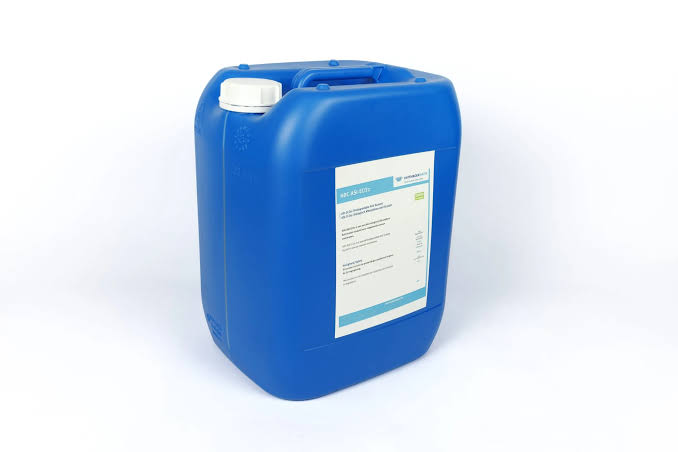
Antiscalants are water-treatment chemicals used to control the formation and deposition of mineral scale in membrane-based treatment systems. They are particularly important in reverse osmosis (RO) and nanofiltration processes, where increasing concentrations of dissolved salts can create scaling risks as water passes through membranes. By controlling crystal growth and precipitation, antiscalants can help maintain membrane performance, support stable operation, and reduce the frequency of cleaning and maintenance.
A recent study by MarkNtel Advisors highlights that the Europe antiscalant industry was valued at USD 556 million in 2025. It is projected to grow from USD 572.95 million in 2026 to USD 847.43 million by 2032, registering a CAGR of 6.74% during 2026–2032. Expansion reflects increasing adoption of membrane-based water treatment, growing water reuse requirements, desalination activity, industrial water management, and the need to improve treatment efficiency and membrane operating life.
Membrane Treatment Creates Consistent Demand
Reverse osmosis systems are widely used for producing treated water from municipal, industrial, brackish, and seawater sources. During the process, dissolved salts and other substances become concentrated in the feedwater that remains after permeate is separated, increasing the potential for mineral precipitation.
DuPont's reverse osmosis treatment guidance explains that scale inhibitors can be used to control carbonate, sulfate, and calcium fluoride scaling. Antiscalants can therefore serve as an important pretreatment component where membrane systems operate under conditions with elevated scaling potential.
Scale Control Protects Membrane Performance
Mineral scaling can reduce membrane productivity and increase pressure requirements, affecting the efficiency of water-treatment operations. Deposits can form when dissolved minerals exceed their solubility limits, particularly at higher recovery rates where salts become increasingly concentrated.
Antiscalant formulations work by interfering with crystal formation and growth, helping keep scale-forming compounds dispersed in the water stream. Different chemistries can target specific scaling conditions, so product selection depends on feedwater composition, operating temperature, membrane configuration, recovery rate, and the types of minerals present.
Water Reuse Strengthens Treatment Requirements
Water reuse is becoming increasingly important across Europe as governments, utilities, and industries seek to improve water resilience. Reusing appropriately treated wastewater can reduce pressure on freshwater resources and provide additional sources for agricultural, industrial, and other applications.
The European Environment Agency states that water reuse, desalination, and rainwater harvesting can diversify water supplies and improve resilience to drought and water scarcity. Its assessment of water savings in Europe also highlights the role of reclaimed water in strengthening water security. These developments can create additional requirements for reliable membrane treatment and supporting scale-control solutions.
Desalination Expands Scale-Control Applications
Desalination is another important application for membrane treatment technologies. Reverse osmosis is widely used to convert seawater or brackish water into freshwater, but high concentrations of dissolved salts can create operational challenges for membranes.
Antiscalants can help treatment operators manage mineral precipitation while maintaining suitable recovery levels. DuPont's technical manual identifies carbonate, sulfate, and calcium fluoride among the scale types that can be controlled through scale inhibitors. The appropriate chemistry and dosage depend on feedwater characteristics and system design, making accurate water analysis an important part of treatment planning.
Industrial Water Treatment Broadens Consumption
Industrial facilities use treated water for manufacturing, process operations, cooling, boiler feed, cleaning, and other activities. Industries with high water consumption can employ membrane systems to produce process water or recover usable water from wastewater streams.
Industrial water treatment can involve complex feedwater conditions containing hardness, silica, metals, organic contaminants, and suspended materials. DuPont's industrial water-treatment case study demonstrates the use of antiscalant alongside ultrafiltration and reverse osmosis to prevent membrane scaling in a steel-production application. This highlights how scale-control chemicals can support treatment systems operating under demanding industrial conditions.
Chemical Selection Requires Precise Control
Antiscalant performance depends on selecting a formulation that matches the chemistry of the feedwater and the operating conditions of the membrane system. Overdosing can create additional treatment concerns, while insufficient dosing may fail to provide adequate scale control.
DuPont recommends evaluating factors such as pH, temperature, recovery, and feed composition when assessing scaling risk. Its technical guidance also notes that antiscalant efficacy should be evaluated with the product manufacturer rather than assumed solely from scaling-risk calculations. This makes water analysis, dosing control, and process monitoring important elements of reliable membrane operation.
Sustainability Encourages Efficient Water Management
European water-management priorities are increasingly focused on reducing freshwater abstraction and improving resource efficiency. Membrane treatment and water reuse can contribute to these objectives when systems are designed and operated appropriately.
The European Environment Agency emphasizes a "water efficiency first" approach and identifies reuse and desalination as potential ways to diversify water supplies. Efficient scale control can complement these strategies by supporting reliable membrane operation and helping treatment systems maintain performance over extended operating periods.
Innovation Shapes Future Treatment Solutions
Europe's antiscalant sector is developing alongside advances in membrane technology, water reuse, desalination, and industrial water management. The projected increase from USD 572.95 million in 2026 to USD 847.43 million by 2032 reflects expanding requirements for effective scale management across different treatment applications.
Future development will remain connected with membrane efficiency, water reuse, desalination, industrial treatment, formulation innovation, and precise chemical dosing. As Europe continues strengthening water resilience and resource efficiency, antiscalants are likely to remain an important component of membrane-based treatment systems designed to manage scaling and maintain reliable water production.

 Polish
 English
 Arabic
 French
 Spanish
 Portuguese
 Turkish
 Dutch
Dutch
 Italiano
 Russian
 Romaian
 Portuguese (Brazil)
 Greek
Greek