
Dealer Management System Market Insights: Streamlining Sales and Service Operations
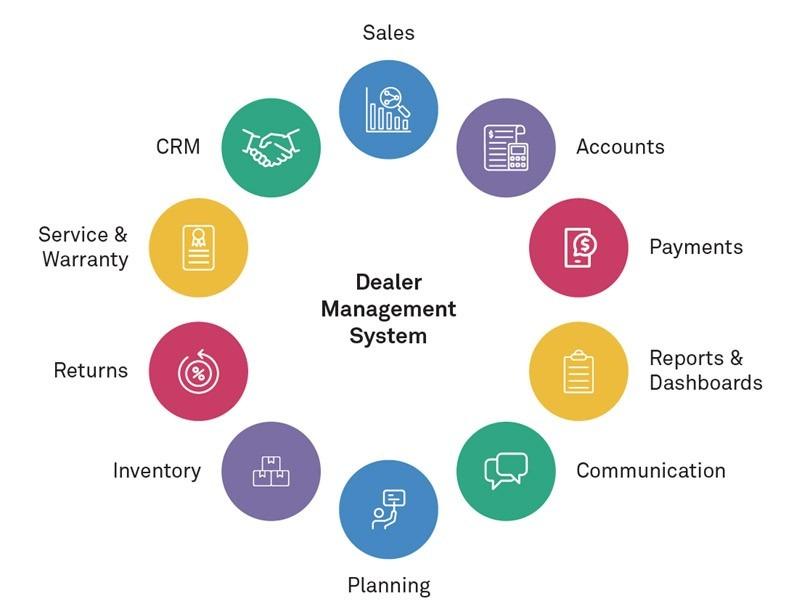
Thorough examination of market factors provides valuable insights for stakeholders navigating the DMS sector effectively. The Dealer Management System Market Analysis reveals complex dynamics shaping competitive landscapes and growth trajectories across segments. The Dealer Management System Market size is projected to grow USD 18.32 Billion by 2035, exhibiting a CAGR of 5.8% during the forecast period 2025-2035. SWOT analysis indicates significant strengths in operational efficiency improvements and data centralization capabilities. Market weaknesses include implementation complexity and change management challenges during system transitions. Opportunities exist in emerging markets and underserved dealer segments while threats include direct manufacturer sales disruption.
Porter's Five Forces analysis reveals moderate supplier bargaining power as technology infrastructure becomes increasingly commoditized. Buyer bargaining power varies based on dealership size with large groups commanding favorable pricing and terms. Threat of new entrants remains moderate given technology barriers and established vendor relationships with manufacturers. Substitute threat analysis indicates limited alternatives for comprehensive dealership management functionality currently available. Competitive rivalry intensity is moderate with established vendors competing primarily on features and service quality.
Value chain analysis highlights significant value creation occurring at implementation and ongoing support service stages. Software development represents substantial investment requiring continuous innovation to maintain competitive positioning. Cloud infrastructure provides foundational capabilities supporting modern DMS delivery and scalability requirements. Professional services including training and customization add considerable value for dealership customers. Data analytics capabilities increasingly represent core value proposition beyond transactional processing functions.
Economic impact analysis demonstrates substantial return on investment potential for DMS implementations across dealerships. Operational efficiency improvements reduce labor costs and processing time for routine transactions significantly. Inventory optimization capabilities reduce carrying costs while improving vehicle turn rates measurably. Customer retention improvements generate incremental revenue through repeat purchases and service loyalty. Compliance cost reductions result from automated reporting and documentation management capabilities.
Top Trending Reports -
Cannabis Retail Pos Software Market Segmentation

 Polish
 English
 Arabic
 French
 Spanish
 Portuguese
 Deutsch
 Dutch
 Italiano
 Russian
 Romaian
 Portuguese (Brazil)
 Greek