
GPT-INDIA Fume Exhaust System: Efficient Industrial Fume Extraction for Cleaner Workplaces
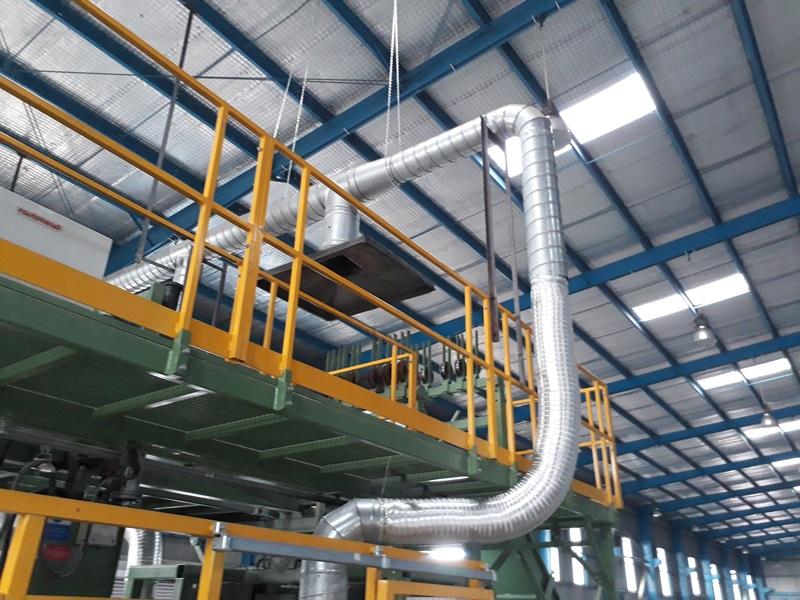
Industrial processes such as welding, metal cutting, chemical processing, painting, heating, soldering, and surface treatment can release fumes, smoke, vapours, and fine airborne contaminants. If these emissions are allowed to accumulate inside a production facility, they can affect workplace air quality, equipment cleanliness, product quality, and overall operating conditions. A properly engineered Fume Exhaust System provides a controlled method of capturing contaminated air at the source and removing it from the working environment.
GPT-INDIA designs and manufactures customised industrial ventilation and air pollution control solutions for different manufacturing processes. By combining suitable extraction arrangements, ductwork, fans, and filtration equipment, the company develops systems designed to provide effective fume capture and dependable airflow.
What Is a Fume Exhaust System?
A Fume Exhaust System is an industrial ventilation arrangement designed to capture and remove fumes, smoke, vapours, and other airborne emissions generated during manufacturing processes.
The system normally consists of extraction hoods or pickup points, ductwork, an appropriately selected fan, filtration or treatment equipment where required, and an exhaust outlet. The contaminated air is captured as close as possible to its source, transported through the duct network, treated when necessary, and then exhausted through the appropriate outlet.
Source capture is particularly important because it prevents contaminants from spreading throughout the production area before they can be removed.
How Does a Fume Exhaust System Work?
The process begins at the emission source. An extraction hood is positioned close to the welding station, furnace, paint operation, chemical process, or other emission-generating equipment.
The fan creates negative pressure within the extraction network, drawing contaminated air through the hood and ductwork. Depending on the nature of the emission, the air may pass through suitable filtration or treatment equipment before being discharged.
For particulate-laden fumes, a fabric or other particulate filter may be suitable. For gases, vapours, and odours, technologies such as an Activated Carbon Filter or Wet Scrubber may be considered depending on the specific contaminant.
The system is engineered so that adequate airflow reaches the required extraction points without creating excessive energy consumption.
Why Source Capture Is Important
General ventilation removes contaminated air after it has mixed with the surrounding atmosphere. Source extraction takes a different approach by capturing emissions before they disperse.
This can significantly improve the effectiveness of a Fume extraction system because the contaminant concentration is generally higher near the source. Capturing fumes at this stage can reduce the quantity of contaminated air that needs to be handled by the overall ventilation system.
For welding and fabrication facilities, for example, extraction hoods positioned close to the welding area can capture smoke and fumes before they travel across the workshop.
Role of Axial Flow Fan
An Axial Flow Fan moves air parallel to the axis of the fan shaft and is commonly used where high airflow volumes are required.
These fans are suitable for applications such as industrial ventilation, general exhaust, process cooling, building ventilation, and certain fume extraction arrangements. Their selection depends on airflow requirements, static pressure, temperature, installation conditions, and the characteristics of the system.
An Axial Flow Fan can be an effective choice where the application requires substantial air movement with relatively suitable pressure characteristics.
When Centrifugal Blowers Are Preferred
Centrifugal Blowers are commonly selected when an industrial Fume Exhaust System requires higher static pressure to overcome resistance created by long duct runs, bends, filters, dampers, hoods, or other components.
Unlike axial fans, centrifugal blowers change the direction of airflow through the impeller. This configuration can provide the pressure characteristics required by many industrial extraction systems.
The correct blower should be selected after evaluating the complete system resistance. Choosing equipment based solely on airflow volume can result in inadequate extraction or unnecessary energy consumption.
Fume Extraction for Welding and Fabrication
Welding operations can generate smoke containing fine particulate matter and metal-related contaminants. Grinding and thermal cutting can add additional airborne particles to the workplace.
A properly designed Fume extraction system can use source-capture hoods, extraction arms, or dedicated enclosures to collect these emissions. The extracted air can then be passed through suitable filtration equipment before discharge.
The arrangement should account for the number of welding stations, operating patterns, simultaneous usage, hood position, and required airflow.
Fume Control in Painting Operations
Painting and coating processes can release paint mist, solvent vapours, and other airborne contaminants. A Paint Booth provides a controlled area for the operation, while an appropriately designed exhaust arrangement removes contaminated air from the enclosure.
Depending on the application, a Water Curtain Paint Booth or dry filtration arrangement may be used to control overspray. Additional gas-phase treatment may be considered where solvent vapours or odours require further control.
Combining enclosure, extraction, and treatment technology provides a more controlled finishing environment.
Fume Exhaust in Chemical and Process Industries
Chemical manufacturing can generate vapours and gases with characteristics that vary significantly from one process to another. Temperature, concentration, corrosiveness, moisture, and chemical composition all influence equipment selection.
A Fume Exhaust System for such applications may incorporate corrosion-resistant ductwork, specialised fans, Wet Scrubbers, Activated Carbon Filters, or other treatment technologies.
The system should be engineered according to the actual chemical properties and process conditions rather than relying on a generic ventilation arrangement.
Importance of Proper Duct Design
Ductwork is one of the most important components of any industrial extraction system. Incorrect duct sizing can create excessive pressure losses or insufficient transport velocity.
Sharp bends, unnecessary branches, poorly positioned dampers, and long duct runs can increase system resistance. A well-designed network distributes airflow according to the requirements of individual extraction points.
Proper duct design also helps the fan operate closer to its intended performance range, which can contribute to better energy efficiency and system reliability.
Choosing the Right Fume Exhaust System
The correct system depends on several factors, including the type of contaminant, emission temperature, source location, required airflow, number of extraction points, operating schedule, duct length, filtration requirements, and available installation space.
Manufacturers should also consider whether the extracted air requires treatment before discharge. Particulate emissions, chemical vapours, acidic gases, solvent fumes, and odours may require different technologies.
For this reason, an application-specific engineering assessment is preferable to selecting a standard system solely on nominal airflow.
GPT-INDIA Industrial Exhaust and Ventilation Solutions
GPT-INDIA designs and manufactures industrial air pollution control and ventilation systems for diverse manufacturing applications. The company develops solutions according to process requirements, airflow calculations, equipment layout, and environmental considerations.
Its product portfolio includes Fume Exhaust Systems, Fume Extraction Systems, Axial Flow Fans, Centrifugal Blowers, Dust Collectors, Pulse Jet Bag Filters, Bag Filters, Filter Bags, Cyclone Dust Collectors, Multicyclone Dust Collectors, Wet Scrubbers, Activated Carbon Filters, Paint Booths, Water Curtain Paint Booths, Air Washer Systems, Rotary Air Locks, Wood Dust Collectors, and Portable Dust Collectors.
GPT-INDIA operates manufacturing units in New Delhi and Sahibabad and provides industrial air pollution control solutions for customers across India and international markets.
GPT-INDIA
59/2/1, Site 4, Industrial Area, Sahibabad, Distt. Ghaziabad – 201010, Uttar Pradesh, India
Phone: +91-9773500660
Email: info@gpt-india.com
Frequently Asked Questions
What is the purpose of a Fume Exhaust System?
A Fume Exhaust System captures and removes fumes, smoke, vapours, and other airborne emissions from industrial processes, preferably at or close to their source.
What is the difference between a Fume Exhaust System and a Fume extraction system?
Both terms generally describe systems designed to capture and remove industrial fumes. The exact configuration depends on the source, contaminant, airflow requirement, and filtration or treatment process.
When should an Axial Flow Fan be used?
An Axial Flow Fan is commonly considered for applications requiring high-volume airflow where the system pressure characteristics are compatible with axial fan operation.
When are Centrifugal Blowers preferred?
Centrifugal Blowers are often suitable for systems requiring higher static pressure to overcome resistance from ductwork, filters, hoods, and other components.
Can fumes be filtered before exhaust?
Yes. Depending on the contaminant, extracted air may require particulate filtration, gas treatment, scrubbing, adsorption, or a combination of technologies before discharge.
Conclusion
A well-designed Fume Exhaust System helps manufacturers control airborne emissions at their source while maintaining efficient airflow throughout the facility. The effectiveness of the installation depends on correctly designed extraction hoods, ductwork, filtration or treatment equipment, and appropriately selected fans.
Whether the application requires an Axial Flow Fan for high-volume ventilation or Centrifugal Blowers for higher-pressure extraction, the equipment should be selected according to the complete system requirements. GPT-INDIA provides application-specific Fume extraction system solutions designed to support cleaner, more efficient, and better-controlled industrial workplaces.

 Polish
 Arabic
 French
 Spanish
 Portuguese
 Deutsch
 Turkish
 Dutch
Dutch
 Italiano
 Russian
 Romaian
 Portuguese (Brazil)
 Greek
Greek