
Proprietorship Underwriting Process: Data, Risk Assessment, and Credit Decisions
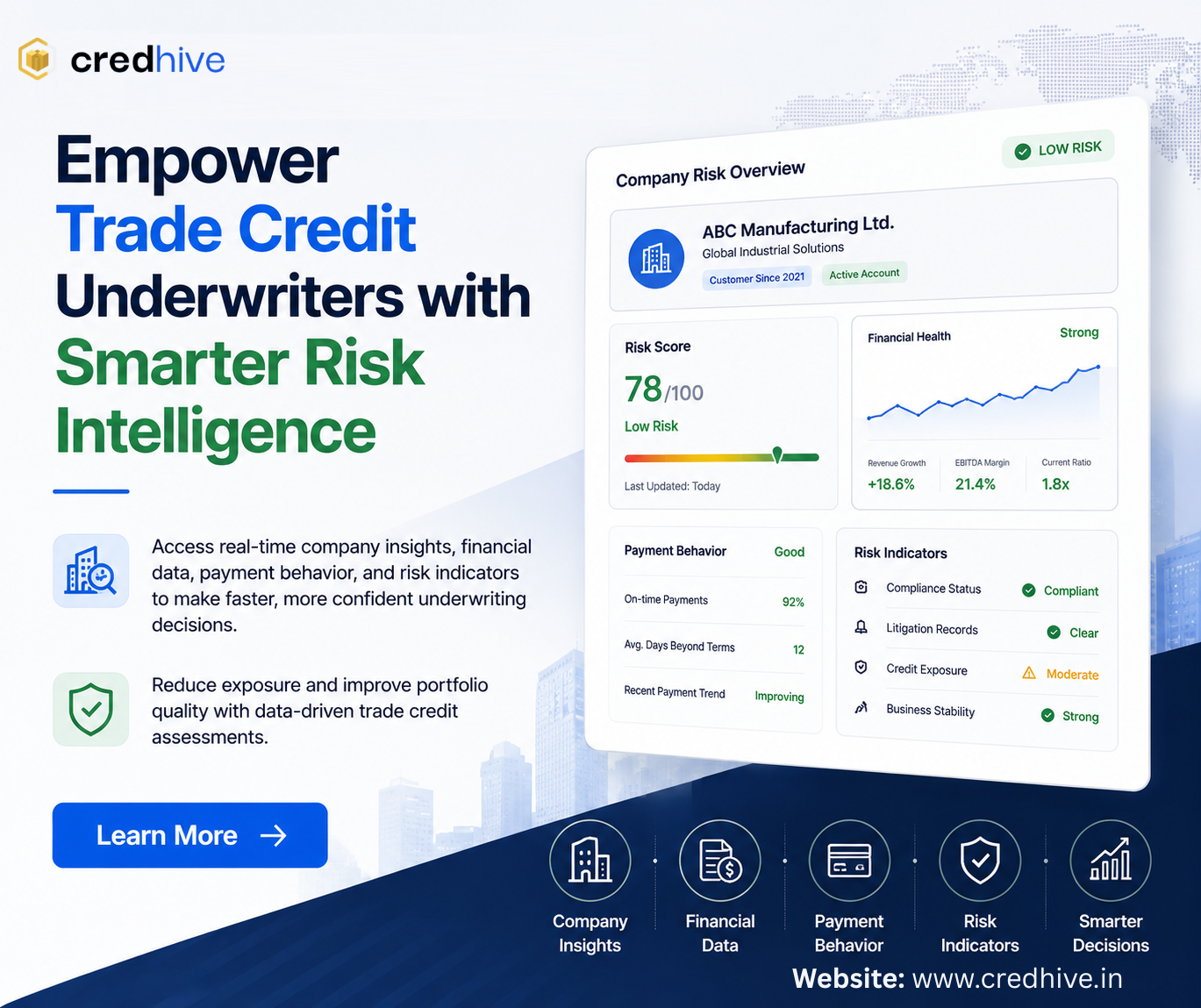
Sole proprietorships play an important role in India's small-business economy. They include retailers, traders, professionals, manufacturers, service providers, and other owner-managed businesses. For banks, NBFCs, fintech companies, and lenders, financing these businesses can create attractive growth opportunities, but underwriting requires a careful assessment of both the business and its proprietor.
Proprietorship underwriting is the process of evaluating the financial strength, business stability, repayment capacity, and overall risk of a sole proprietorship before extending credit. Because the business and proprietor are closely connected, lenders need a broader assessment than they might apply to a larger corporate borrower.
A structured underwriting process can help lenders make faster decisions while maintaining appropriate risk controls.
What Is Proprietorship Underwriting?
Proprietorship underwriting involves assessing the creditworthiness of a sole proprietorship and its owner to determine whether the proposed financing is appropriate.
Unlike a company with a separate legal identity, a sole proprietorship is owned and controlled by one individual. Therefore, the lender may need to consider business performance alongside the proprietor's financial and credit profile.
The assessment may include:
- Business turnover and profitability
- Bank transaction patterns
- GST filings and compliance
- Income tax information
- Credit history
- Existing loans and liabilities
- Business vintage
- Payment behavior
- Business and industry risk
- Proprietor's financial profile
The exact requirements vary according to the lender, product, loan size, and internal credit policy.
Why Is Proprietorship Underwriting Different?
Close Link Between Owner and Business
The financial health of a proprietorship is closely connected to its owner. Personal financial obligations, credit behavior, and the owner's ability to manage the business can therefore influence the overall risk assessment.
Limited Corporate Disclosure
Compared with larger companies, small proprietorships may have fewer standardized financial disclosures. Lenders may need to combine multiple data points to understand the actual financial position of the business.
Variable Cash Flows
Many proprietorships operate in sectors where revenue and cash flows fluctuate significantly. Seasonal businesses, for example, may generate substantially higher revenue during certain periods and lower revenue during others.
Underwriters should consider these patterns rather than interpreting short-term fluctuations in isolation.
Key Factors in Proprietorship Underwriting
Financial Performance
Revenue, profitability, operating expenses, liabilities, and cash flows help lenders understand whether the business can support additional debt.
For example, a proprietorship with consistent revenue growth and manageable liabilities may present a different risk profile from a business with declining turnover and increasing debt.
Banking and Cash Flow Behavior
Bank transaction patterns can provide useful information about actual business activity and liquidity. Regular inflows, repayment behavior, and unusual transaction patterns may provide additional context during underwriting.
GST and Tax Compliance
GST filings and tax-related information can help lenders understand reported business activity and compliance. Inconsistencies between different financial indicators may require additional verification.
Credit History and Existing Obligations
The proprietor's credit profile and existing borrowing should be considered alongside the business's outstanding obligations. This helps lenders estimate total debt exposure and repayment capacity.
Business Vintage and Industry Risk
A business that has operated consistently for several years may have a different risk profile from a newly established business. Industry conditions should also be considered because demand volatility, competition, and regulatory changes can affect repayment capacity.
How Technology Can Improve Proprietorship Underwriting
Traditional underwriting can require credit teams to collect information manually from multiple sources. This can increase processing time and create inconsistencies.
A digital proprietorship underwriting platform can help centralize relevant information, automate verification, apply credit rules, and provide risk insights to underwriters.
For example, an NBFC processing a large number of small-business applications can use standardized workflows to identify eligible applications quickly while routing complex or high-risk cases to experienced credit professionals.
Automation does not eliminate human judgment. Instead, it allows underwriters to spend more time reviewing exceptions and complex cases.
Role of Risk Intelligence in Proprietorship Underwriting
Risk intelligence can provide additional context beyond traditional financial metrics. Financial deterioration, compliance concerns, litigation, payment behavior, or significant business changes may influence the risk profile of a proprietorship.
Combining these signals can help lenders identify potential concerns before finalizing a credit decision.
For instance, a business may report stable turnover but simultaneously show increasing liabilities and payment delays. Reviewing these indicators together could prompt the lender to conduct additional due diligence before approving the facility.
Benefits for Banks and NBFCs
A structured proprietorship underwriting process can help financial institutions:
- Improve credit assessment
- Reduce manual processing
- Standardize underwriting decisions
- Identify potential risks earlier
- Accelerate loan processing
- Improve operational efficiency
- Strengthen portfolio quality
- Support responsible lending
Faster and more transparent underwriting can also improve customer experience, particularly for small businesses that depend on timely access to working capital.
How Credhive Supports Proprietorship Underwriting
Credhive provides business intelligence, financial insights, risk assessment, Business Information Reports, and early warning signals to support data-driven credit decisions. Banks, NBFCs, fintech lenders, and financial institutions can use these capabilities to evaluate proprietorships, understand business performance, strengthen due diligence, and identify potential risk indicators. By bringing relevant business and risk information into a unified view, Credhive helps credit teams improve underwriting efficiency while maintaining stronger risk controls.
Conclusion
Proprietorship underwriting requires lenders to look beyond a single credit score or financial document. Because the proprietor and business are closely connected, an effective assessment should consider financial performance, cash flows, compliance, credit history, existing obligations, business vintage, and broader risk indicators.
Technology can make this process faster and more consistent by bringing relevant information into a structured workflow. When combined with human credit expertise, data-driven underwriting can help banks, NBFCs, and fintech lenders serve proprietorships efficiently while maintaining responsible credit standards.
FAQs
What is proprietorship underwriting?
Proprietorship underwriting is the process of evaluating a sole proprietorship and its owner to determine creditworthiness, repayment capacity, and the suitability of a proposed loan or credit facility.
What documents are commonly required for proprietorship underwriting?
Requirements vary by lender, but they may include financial statements, GST records, income tax information, bank statements, business registration details, credit information, and proprietor-related financial documents.
Why is the proprietor's credit history important?
Because the owner and proprietorship are closely connected, the proprietor's credit behavior and existing financial obligations can provide important context when assessing overall repayment risk.
How can technology improve proprietorship underwriting?
Technology can automate data collection, verification, credit rules, risk analysis, and workflow management, helping lenders reduce manual effort and process applications more efficiently.
What risks should lenders consider when underwriting a proprietorship?
Lenders may consider financial instability, irregular cash flows, excessive debt, poor repayment behavior, compliance issues, business concentration, industry risks, and other factors that could affect repayment capacity.

 Polish
 English
 Arabic
 French
 Spanish
 Portuguese
 Deutsch
 Turkish
 Dutch
Dutch
 Russian
 Romaian
 Portuguese (Brazil)
 Greek
Greek