
Understanding the Spectrum of Immersive Extended Reality (XR)
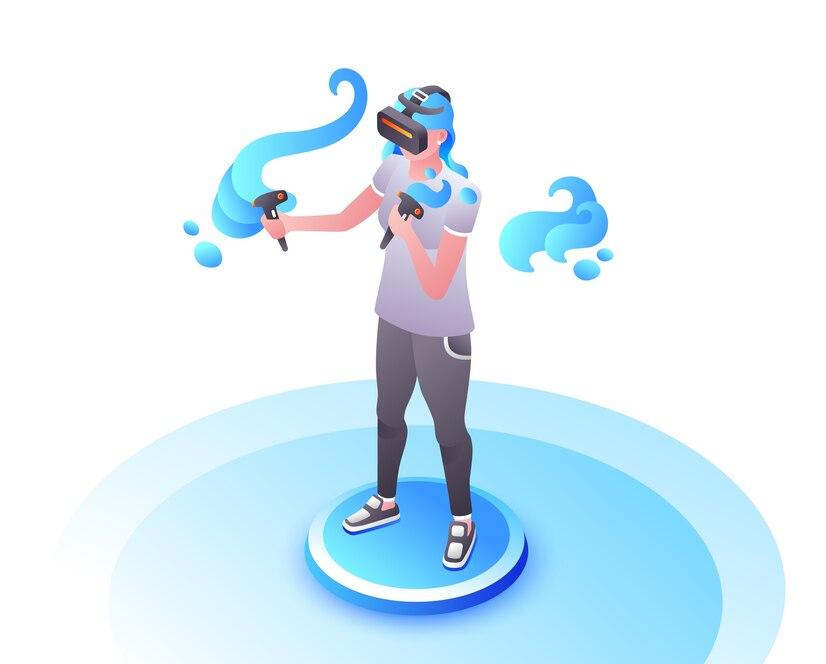
In the quest to merge our physical and digital worlds, a new technological frontier has emerged: Extended Reality (XR). XR is an umbrella term that encompasses all real-and-virtual combined environments and human-machine interactions generated by computer technology and wearables. It is not a single technology but a spectrum of immersive experiences. The immense potential of XR to revolutionize how we work, play, and interact is driving significant investment, with the global market projected to grow from USD 51.32 billion in 2025 to USD 299.95 billion by 2035. This expansion, occurring at a powerful compound annual growth rate (CAGR) of 17.41%, signals the dawn of a new computing paradigm.
The XR spectrum is defined by three core technologies: Virtual Reality (VR), Augmented Reality (AR), and Mixed Reality (MR). Virtual Reality is the most immersive of the three, completely replacing a user's real-world environment with a fully computer-generated one, typically experienced through a headset that blocks out all external stimuli. VR transports users to entirely new digital worlds, making it ideal for gaming, simulations, and virtual social experiences. Augmented Reality, on the other hand, does not replace the user's environment but rather overlays digital information onto the real world. This is most commonly experienced through smartphones (like in Pokémon GO) or smart glasses, enhancing our perception of reality with contextual data.
Mixed Reality (MR) is the most advanced form of XR, representing a true fusion of the physical and digital worlds. Unlike AR, which simply overlays information, MR allows digital objects to be aware of and interact with the real-world environment in real time. For example, a virtual ball in an MR experience could bounce off a real-world table and roll under a real-world chair. This is achieved through sophisticated sensors and spatial mapping technology that allow the device to understand the geometry and layout of the user's surroundings. MR is often seen as the ultimate goal of XR, creating a seamless blend of reality and virtuality that has profound implications for design, collaboration, and entertainment.
The enabling technologies that power the entire XR spectrum are advancing at a rapid pace. This includes the development of lighter, more powerful standalone headsets with higher-resolution displays and wider fields of view. It also involves breakthroughs in inside-out tracking, which allows headsets to track their position without external sensors, and hand tracking, which enables more natural interaction without the need for physical controllers. The rollout of 5G and edge computing is also critical, as it provides the high bandwidth and low latency required to stream complex XR experiences from the cloud, untethering users and paving the way for more sophisticated and collaborative applications.

 Polish
 English
 Arabic
 French
 Spanish
 Portuguese
 Deutsch
 Turkish
 Dutch
Dutch
 Russian
 Romaian
 Portuguese (Brazil)
 Greek
Greek