
Naturalization Citizenship US A Practical Guide for 2026
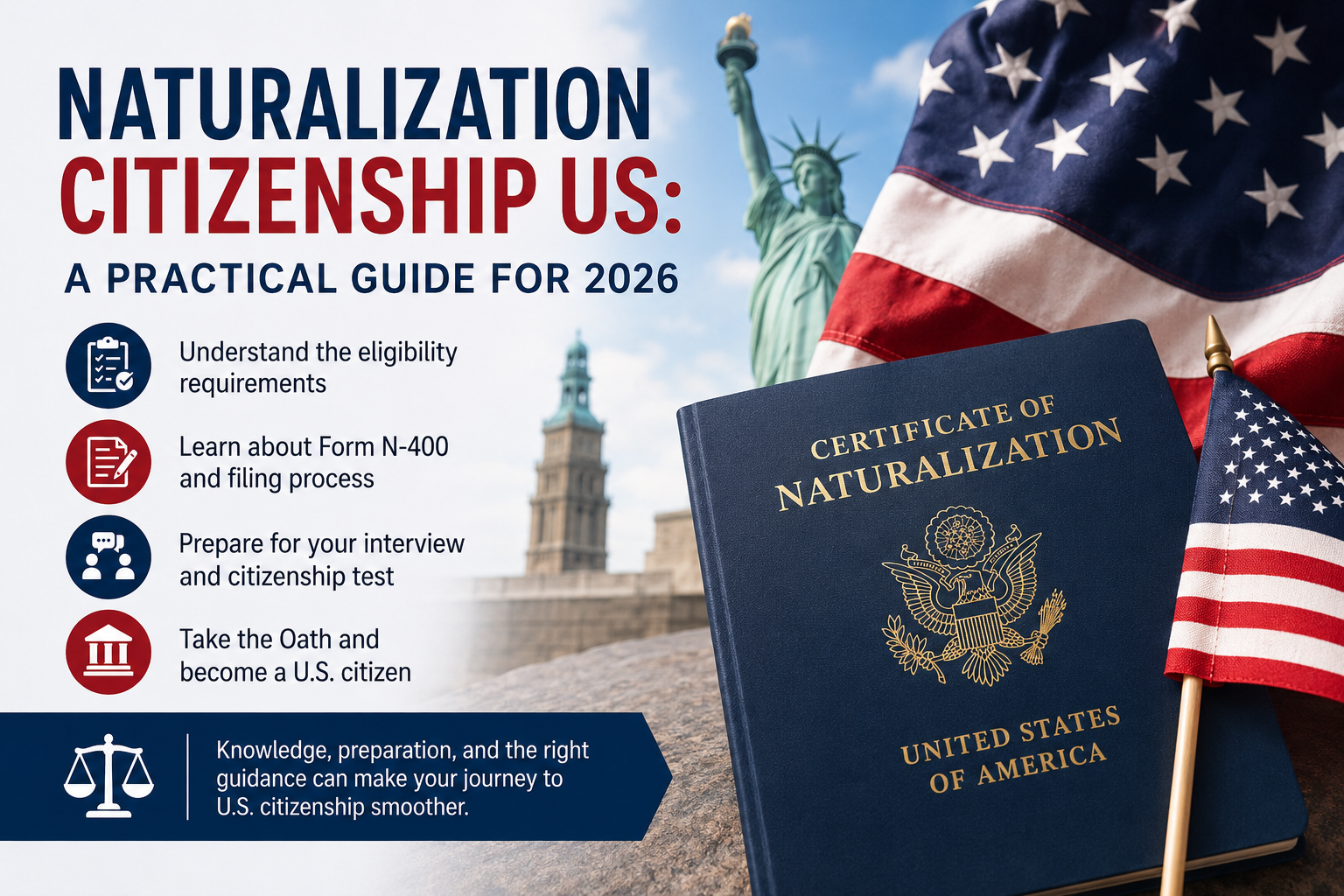
Becoming a U.S. citizen is an important milestone for many lawful permanent residents. However, the path from holding a green card to completing the naturalization process involves several requirements, forms, deadlines, and personal-history questions. Understanding these steps before filing can help applicants avoid preventable mistakes and prepare more confidently.
Naturalization is the legal process through which an eligible permanent resident becomes a U.S. citizen. For most applicants, the process involves confirming eligibility, submitting Form N-400, attending required appointments, completing an interview and applicable tests, and taking the Oath of Allegiance.
Who May Qualify for U.S. Naturalization?
One of the first questions applicants should ask is whether they meet the basic eligibility requirements. For many permanent residents, the general rule requires at least five years as a lawful permanent resident before applying. Applicants generally must also satisfy continuous residence, physical presence, state or USCIS district residence, and good moral character requirements.
There are exceptions for certain applicants. For example, some people married to U.S. citizens may qualify under a different statutory timeline, while certain military applicants can have separate rules.
Because eligibility depends on an applicant's individual immigration history, simply having a green card for a particular number of years does not automatically guarantee approval.
What Is Form N-400?
Form N-400, Application for Naturalization, is the principal application used by eligible individuals seeking naturalized citizenship. The form asks for extensive information about an applicant's identity, residences, employment, family, travel, immigration history, and other background information.
Accuracy is extremely important. A seemingly minor inconsistency between the application and information previously provided to immigration authorities can lead to additional questions or delays.
Before submitting the application, applicants should carefully review:
- Previous addresses and dates of residence
- Employment and education history
- International travel
- Marital and family information
- Immigration history
- Criminal or citation history, when applicable
- Tax-related information
- Previous immigration applications
Keeping copies of the submitted application and supporting documents can also make interview preparation easier.
Understanding Continuous Residence and Physical Presence
Residence and physical presence are related but different concepts.
Continuous residence generally concerns maintaining a principal residence in the United States for the required period. Physical presence focuses on the actual amount of time an applicant has been physically inside the country.
Extended trips outside the United States can create complications. An applicant should not assume that a valid green card automatically means every period of international travel will be irrelevant to naturalization eligibility.
Travel records, passports, entry and exit information, and other documentation may become important when preparing the application. If an applicant has spent significant periods outside the country, reviewing the travel history before filing can help identify potential concerns.
What Happens After Filing?
After USCIS receives the application, the agency may schedule the applicant for biometrics if required. Applicants should carefully follow the instructions on any appointment notice and keep their contact information current.
The next major stage is generally the naturalization interview. During this appointment, a USCIS officer reviews the N-400 and asks questions about the applicant's application and background.
Applicants should be prepared to explain their answers rather than simply memorize the form. If information has changed since filing, it is important to understand how to address those changes accurately.
Preparing for the Citizenship Interview and Test
For applicants subject to the testing requirements, the naturalization process includes English and civics components. The English portion can involve speaking, reading, and writing, while the civics portion covers U.S. history and government. Certain exemptions or accommodations may apply depending on the applicant's circumstances.
Good preparation involves more than memorizing civics questions. Applicants should review their entire N-400 because the officer may ask questions based on the information provided in the application.
A useful preparation strategy is to:
- Review every answer on the submitted N-400.
- Practice explaining travel, employment, and residence history.
- Study the applicable civics materials.
- Practice English reading and writing if required.
- Organize identification and immigration documents.
- Review any changes that occurred after filing.
The goal is to provide clear, truthful, and consistent answers.
Common Problems That Can Complicate an Application
Many naturalization problems arise from issues that applicants did not recognize before filing.
Frequent concerns can include long trips outside the United States, unresolved criminal matters, inaccurate information on prior immigration applications, tax problems, questions concerning good moral character, or uncertainty about previous immigration status.
A past issue does not necessarily mean an applicant cannot become a citizen. However, it may mean the application deserves additional review before submission.
For someone considering naturalization citizenship US options, identifying potential problems early can be much better than discovering them after filing.
When Should You Consider Legal Guidance?
Not every applicant needs an attorney. Some people with straightforward immigration histories may be comfortable completing the process using official USCIS resources.
Legal guidance can become particularly valuable when an applicant has unusual travel history, prior arrests or convictions, immigration violations, complicated family circumstances, inconsistent records, or concerns about previous applications.
An experienced immigration attorney Los Angeles applicants can consult may review the person's immigration history, identify potential eligibility concerns, explain available options, and help prepare for questions that could arise during the process.
An attorney cannot guarantee approval, but careful preparation can help an applicant understand potential risks before submitting an application.
What Happens After the Interview?
USCIS may approve the application, continue the case while requesting additional information or action, or deny the application. The outcome depends on the applicant's eligibility and the evidence available in the case.
If the application is approved, the final step is the Oath of Allegiance. USCIS explains that an applicant does not become a U.S. citizen through naturalization until taking the oath at the naturalization ceremony. Afterward, the applicant receives a Certificate of Naturalization.
How Applicants Can Reduce Avoidable Delays
Preparation is one of the best ways to make the process more manageable. Applicants should keep their immigration documents organized, monitor USCIS notices, update their address when necessary, and respond to requests within the applicable deadline.
It is also important not to rely on outdated information about filing requirements, fees, forms, or testing procedures. USCIS rules and procedures can change, so applicants should verify current requirements using official government resources before submitting an application.
Final Thoughts
The path to U.S. citizenship can feel complicated, but understanding the process makes it easier to identify what needs attention. Eligibility, residence history, physical presence, good moral character, accurate documentation, interview preparation, and the applicable citizenship test all deserve careful consideration.
For applicants with a straightforward history, preparation and accurate paperwork may make the process easier to navigate. For people with immigration complications or questions about eligibility, obtaining individualized legal advice before filing can help identify potential issues early.
Naturalization is a significant legal step, so applicants should treat the N-400 as more than a routine form. Accurate information, careful preparation, and current guidance can help applicants approach the process with greater confidence.

 Polish
 English
 Arabic
 French
 Spanish
 Portuguese
 Turkish
 Dutch
Dutch
 Italiano
 Russian
 Romaian
 Portuguese (Brazil)
 Greek
Greek