
How Month-End Closings Prevent Small Business Cash Issues
Managing a small business requires more than generating sales and paying bills. Business owners also need to understand where money is coming from, where it is going, and whether financial records accurately reflect current operations. Without reliable financial information, even a profitable business can experience cash flow problems or make decisions based on incorrect numbers.
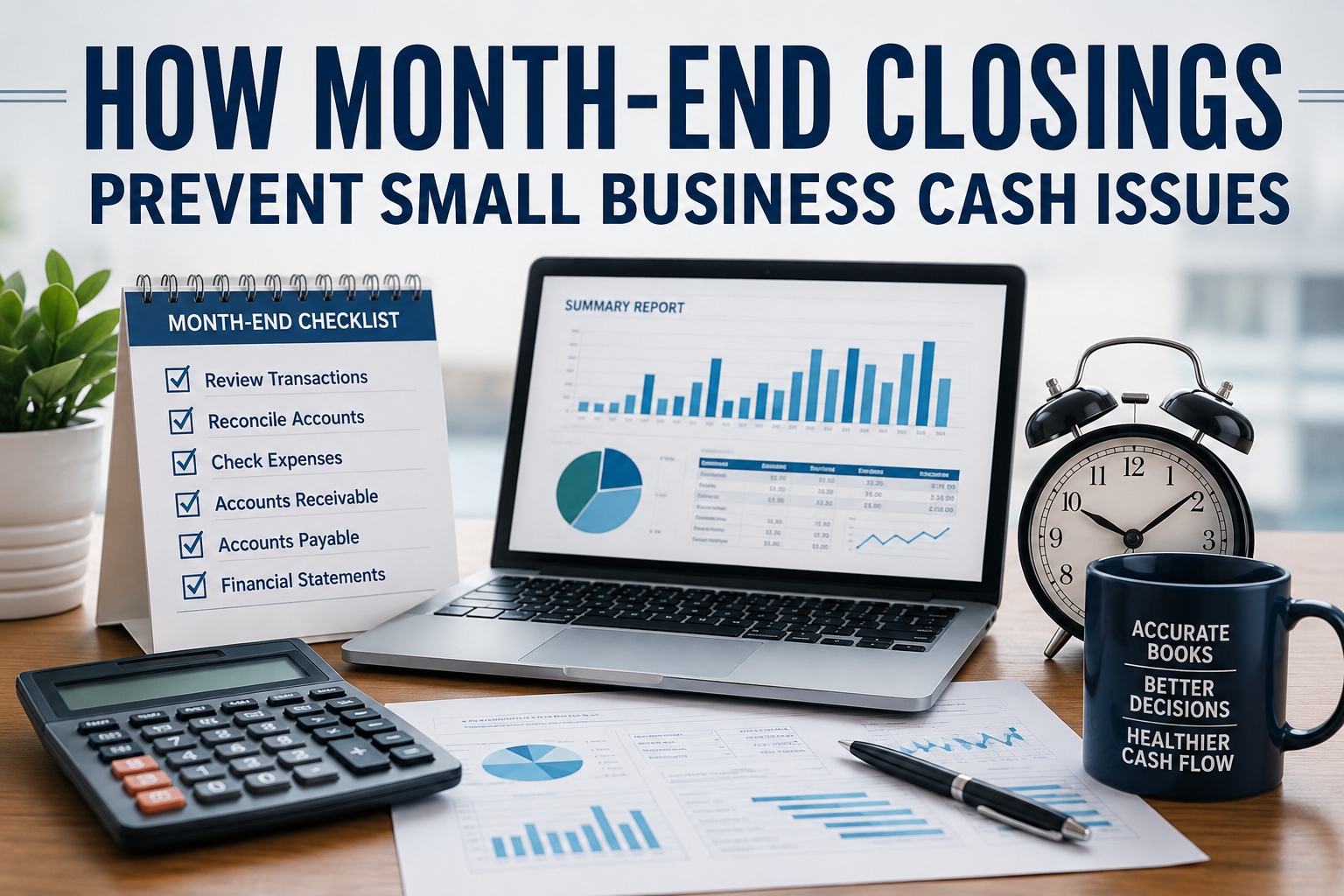
A structured Month-End Closings process can help solve these challenges. By reviewing transactions, reconciling accounts, checking expenses, and updating financial reports, business owners can gain a clearer picture of their company's financial position.
For companies that do not have enough internal resources to manage their books consistently, working with a small business bookkeeping service can also provide additional support, accuracy, and organization.
What Is a Month-End Closing?
A month-end closing is the process of reviewing and finalizing a company's financial records for a specific month. It ensures that transactions have been properly recorded and that important accounts are accurate before financial statements are prepared.
The process commonly includes:
- Reviewing income and expenses
- Reconciling bank and credit card accounts
- Checking accounts payable and receivable
- Recording outstanding transactions
- Reviewing payroll-related entries
- Identifying unusual or incorrect transactions
- Updating the general ledger
- Preparing financial statements
The goal is not simply to complete paperwork. The purpose is to create dependable financial information that can be used for planning, budgeting, and operational decisions.
Why Accurate Closing Matters for Cash Flow
Cash flow problems often develop when business owners do not have a current understanding of their finances. A company may appear to have sufficient cash in its bank account while upcoming payroll, supplier payments, taxes, or loan obligations create financial pressure.
Regular financial closing helps identify these issues earlier.
For example, reviewing monthly records may reveal that customer payments are taking longer than expected. It could also show that operating expenses have increased or that recurring subscriptions are no longer necessary. These insights give owners an opportunity to respond before a minor issue becomes a major financial problem.
Accurate records also make it easier to compare actual performance against the company's budget.
Step 1: Reconcile Financial Accounts
One of the most important parts of the closing process is account reconciliation. Bank and credit card statements should be compared with the transactions recorded in the accounting system.
Differences can occur because of:
- Missing transactions
- Duplicate entries
- Bank fees
- Incorrect amounts
- Outstanding checks
- Electronic payments
- Timing differences
Finding these discrepancies at the end of each month helps prevent inaccurate balances from carrying into future reporting periods.
Step 2: Review Income and Expenses
Revenue and expenses should be reviewed carefully before the books are finalized. Business owners should ask whether all income has been recorded and whether expenses are categorized correctly.
This review can uncover issues such as an unusually high utility bill, unexpected software charges, duplicate vendor payments, or missing customer invoices.
Expense analysis also provides valuable information about spending patterns. If certain costs continue to rise, management can investigate the reason and determine whether changes are necessary.
Step 3: Check Accounts Receivable
Unpaid customer invoices can create significant cash flow pressure. A business may have strong sales but still struggle financially when customers do not pay on time.
During the monthly review, businesses should examine outstanding invoices, aging balances, overdue accounts, and expected collection dates.
This information helps answer important questions:
- Which customers have overdue balances?
- How much money is expected soon?
- Which invoices require follow-up?
- Are payment terms working effectively?
A consistent review of receivables can help businesses improve collections and maintain healthier working capital.
Step 4: Review Accounts Payable
Bills and supplier obligations deserve equal attention. Reviewing accounts payable helps businesses understand what they currently owe and when payments are due.
This is particularly useful for managing short-term cash requirements. Knowing upcoming obligations allows owners to prioritize payments and avoid unnecessary late fees or strained supplier relationships.
Businesses can also review vendor expenses to identify recurring charges or services that may no longer provide sufficient value.
Step 5: Identify Missing or Unusual Transactions
Small errors can have a surprisingly large effect on financial reporting when they accumulate over several months.
A proper closing review should look for transactions that appear unusual, incomplete, or inconsistent with normal business activity. This could include a large expense, unexpected refund, missing deposit, or incorrectly categorized purchase.
Addressing these problems promptly makes future reporting more reliable and reduces the amount of cleanup required later.
Step 6: Review Financial Statements
Once the records have been checked and adjusted, businesses can review key financial reports such as the income statement, balance sheet, and cash flow statement.
These reports can help owners understand:
- Whether revenue is increasing or declining
- Which expenses are consuming the most resources
- How much cash is available
- Whether liabilities are increasing
- Whether the business is generating sustainable profit
Financial statements are much more useful when the underlying bookkeeping records are complete and accurate.
Common Month-End Problems Small Businesses Face
Many small businesses struggle with closing because bookkeeping is performed inconsistently. Transactions may be entered weeks later, receipts can be misplaced, and account reconciliations may be postponed.
Other common problems include:
Delayed Data Entry
When transactions are recorded late, financial reports may not reflect the company's current situation.
Poor Expense Categorization
Incorrect classifications can distort profit calculations and make it difficult to understand spending patterns.
Unreconciled Accounts
Accounts that have not been reconciled can contain errors that remain hidden for months.
Incomplete Invoices
Missing or delayed invoices can make revenue appear lower than it actually is and can slow down collections.
Lack of Consistency
A closing process that changes every month is more likely to overlook important tasks. A standardized checklist creates greater accountability.
How Professional Bookkeeping Support Can Help
Business owners often have limited time to manage accounting tasks alongside sales, customer service, employees, and daily operations. Professional bookkeeping support can help maintain organized records and establish a consistent financial workflow.
A bookkeeping professional can assist with transaction recording, reconciliations, account reviews, financial reporting, and other recurring accounting tasks. This allows business owners to spend more time on operations while still having access to reliable financial information.
The right support can be especially useful when a business is growing, handling more transactions, adding employees, or preparing for tax reporting.
Create a Simple Closing Checklist
A practical checklist can make the monthly process easier to manage. Businesses can include tasks such as:
- Record all monthly transactions.
- Reconcile bank and credit card accounts.
- Review unpaid invoices.
- Check outstanding bills.
- Verify payroll entries.
- Review unusual transactions.
- Correct bookkeeping errors.
- Review financial statements.
- Compare results with the previous month.
- Document unresolved issues for follow-up.
The exact checklist can vary depending on the size and industry of the business, but consistency is the most important factor.
Final Thoughts
Reliable financial records give small business owners the information they need to identify problems before they become expensive. A well-managed closing process can reveal cash flow concerns, overdue customer balances, unnecessary expenses, accounting errors, and changes in profitability.
More importantly, it turns bookkeeping data into useful business insight. Instead of waiting until tax season or a financial problem occurs, owners can review performance regularly and make informed decisions throughout the year.
By combining a consistent monthly review with organized accounting practices and support from a small business bookkeeping service when needed, small businesses can build stronger financial visibility, improve financial control, and operate with greater confidence.

 Polish
 English
 Arabic
 French
 Spanish
 Portuguese
 Deutsch
 Turkish
 Dutch
Dutch
 Russian
 Romaian
 Portuguese (Brazil)
 Greek
Greek