
How a Short Sale Appraisal Helps Avoid Costly Mistakes
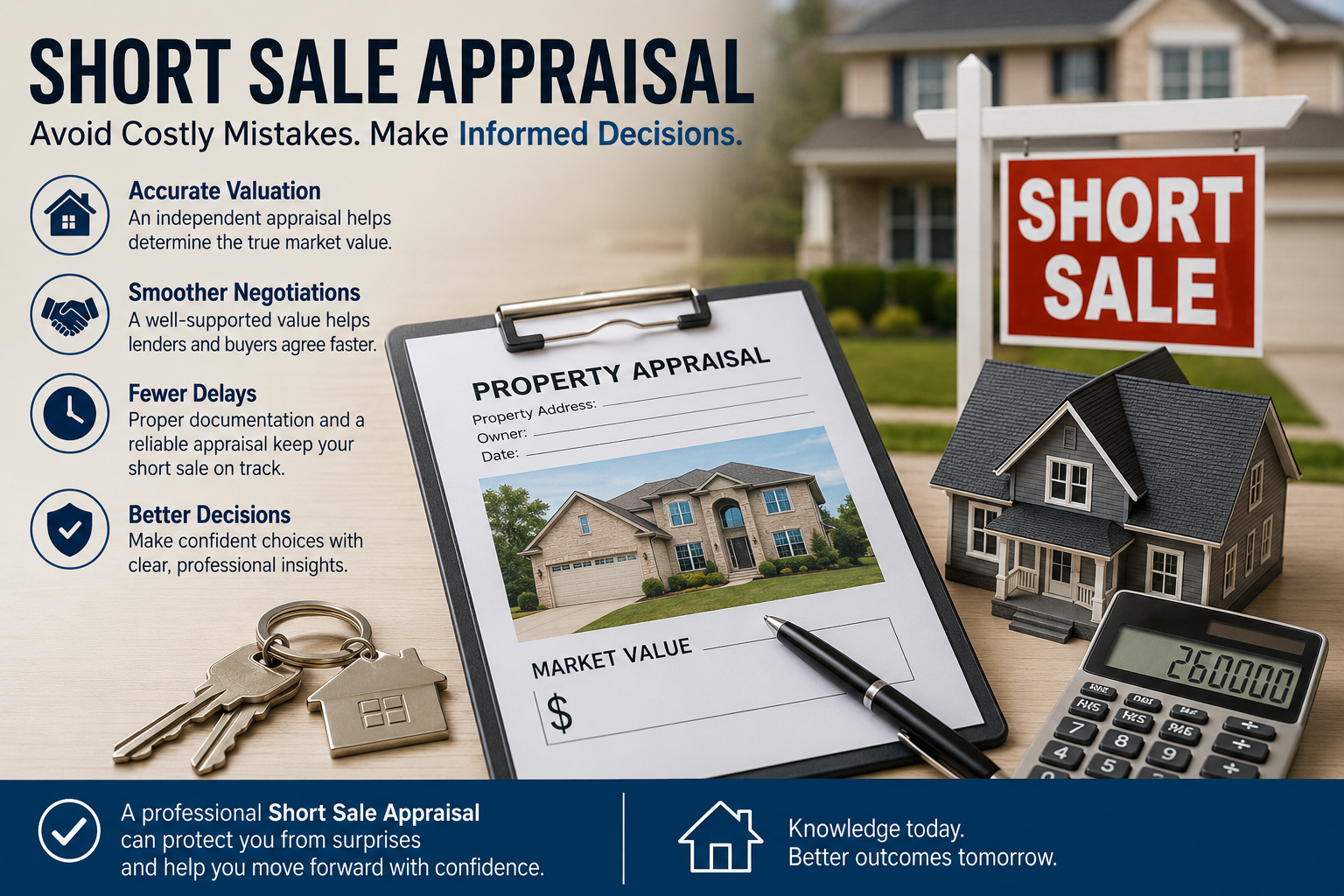
A short sale can be a complicated real estate transaction, especially when the property is worth less than the amount owed on the mortgage. Before a lender agrees to accept less than the outstanding loan balance, it typically needs reliable information about the property's current market value. This is where a professional appraisal can become an important part of the process.
A Short Sale Appraisal provides an independent opinion of a property's market value based on its condition, location, comparable sales, and current market conditions. Understanding how this valuation works can help homeowners, lenders, agents, and potential buyers make better decisions and reduce unnecessary delays.
What Is a Short Sale Appraisal?
A short sale appraisal is a professional assessment of a property's current market value when the expected sale price may not cover the remaining mortgage debt and selling costs.
For example, suppose a homeowner owes $300,000 on a property, but similar homes in the area suggest that the property may only sell for approximately $260,000. The lender may need an independent valuation before deciding whether to approve the proposed transaction.
The appraiser does not determine whether the lender should approve the short sale. Instead, the appraiser provides an objective opinion of value that can help the lender evaluate the financial implications of the deal.
Why Accurate Valuation Matters
One of the biggest problems in a short sale is disagreement over the property's value. If the proposed sales price is significantly different from the property's market value, the lender may question the transaction.
An accurate valuation can help establish a reasonable basis for negotiations.
A well-supported appraisal may consider:
- Recent comparable property sales
- Current listings and competing properties
- Property size and layout
- Location and neighborhood characteristics
- Overall condition of the home
- Recent renovations or improvements
- Deferred maintenance
- Market trends
- Supply and demand
- Property-specific features
This information gives decision-makers a clearer picture of what the property could reasonably command in the current market.
How the Appraisal Process Works
The process generally begins with an inspection of the property. The appraiser evaluates both the interior and exterior, taking note of characteristics that may influence value.
The appraiser may review the number of bedrooms and bathrooms, living area, lot size, construction quality, updates, structural concerns, and visible maintenance issues.
After inspecting the property, the appraiser researches comparable sales. These are recently sold properties that share relevant characteristics with the subject property. The strongest comparisons are usually located in the same or a similar market area and have similar physical characteristics.
The appraiser then analyzes the available information and prepares a report explaining the valuation.
What Can Lower a Short Sale Property's Value?
Property condition is particularly important when determining market value. A home with significant deferred maintenance may attract fewer buyers and require a lower asking price.
Common concerns can include:
- Roof damage
- Outdated kitchens or bathrooms
- Water damage
- Foundation concerns
- Broken windows
- Plumbing or electrical problems
- Poor exterior maintenance
- Unfinished repairs
- Outdated mechanical systems
However, not every defect has the same effect on value. An appraiser considers the property's overall condition and how similar issues affect comparable properties in the local market.
Homeowners should avoid assuming that every repair automatically adds the same amount to the property's value. Market demand and buyer expectations play an important role.
How Comparable Sales Affect the Valuation
Comparable sales, often called "comps," are one of the most important components of a residential valuation.
An appraiser generally looks for recently sold properties that are similar in size, location, age, design, condition, and other relevant characteristics. The goal is not simply to find the highest or lowest sale price nearby. Instead, the appraiser analyzes which properties provide the most meaningful evidence of current market value.
This is especially important when a homeowner or real estate agent believes a property should be valued at a particular amount. Personal expectations do not replace market evidence.
What If the Appraised Value Is Higher Than the Offer?
A difference between the appraisal and proposed sale price can create questions during negotiations.
If the appraisal indicates that the property may be worth considerably more than the proposed offer, the lender may have less incentive to approve a deeply discounted sale. The lender could request a higher purchase price or additional documentation explaining why the offer reflects actual market conditions.
Conversely, if the valuation supports the proposed price, it may provide stronger evidence for the transaction.
The final decision, however, belongs to the lender and other parties involved in the short sale.
How Homeowners Can Prepare for an Appraisal
Preparation cannot guarantee a particular valuation, but it can help ensure that the appraiser has accurate information about the property.
Before the inspection, homeowners can:
- Make necessary minor repairs where practical.
- Provide information about significant improvements.
- Keep relevant renovation records available.
- Make sure all areas of the property are accessible.
- Address obvious safety or maintenance concerns.
- Provide details about upgrades that may not be immediately visible.
If the property has serious damage, do not attempt to hide it. Accurate information allows the appraiser to develop a more credible opinion of value.
When Should You Get Professional Help?
A short sale involves more than determining a property's value. Homeowners may also need assistance from real estate agents, attorneys, mortgage professionals, or other qualified specialists depending on their circumstances.
For valuation-related questions, working with qualified professionals can help property owners understand the factors affecting market value and identify documentation that may be useful during the transaction.
When comparing Best Appraisal Services Chicago, for example, consumers should look beyond price alone. Consider the appraiser's credentials, relevant residential experience, familiarity with the local market, turnaround expectations, and ability to provide a well-supported report.
Common Mistakes to Avoid
Several mistakes can make the short sale process more difficult.
One is relying on an outdated valuation. Real estate markets can change, so an older estimate may not accurately represent current conditions.
Another mistake is choosing comparable properties simply because they support a desired price. Comparable sales should be selected based on relevant property and market characteristics rather than the outcome someone wants.
It is also important not to confuse an online home-value estimate with a professional appraisal. Automated estimates can be useful for general research, but they may not account for the property's actual condition or all relevant local factors.
Final Thoughts
A short sale requires careful evaluation because the lender is being asked to accept less than the amount owed. A reliable property valuation can provide important evidence about current market conditions and help all parties understand whether a proposed transaction is reasonable.
The most useful appraisal is one supported by appropriate comparable sales, accurate property information, and a clear analysis of market conditions. By understanding the process and preparing the necessary information, homeowners can reduce confusion and make more informed decisions during a challenging real estate transaction.

 Polish
 English
 Arabic
 French
 Spanish
 Portuguese
 Turkish
 Dutch
Dutch
 Italiano
 Russian
 Romaian
 Portuguese (Brazil)
 Greek
Greek