
Best Franchises for Small Towns A Practical Guide
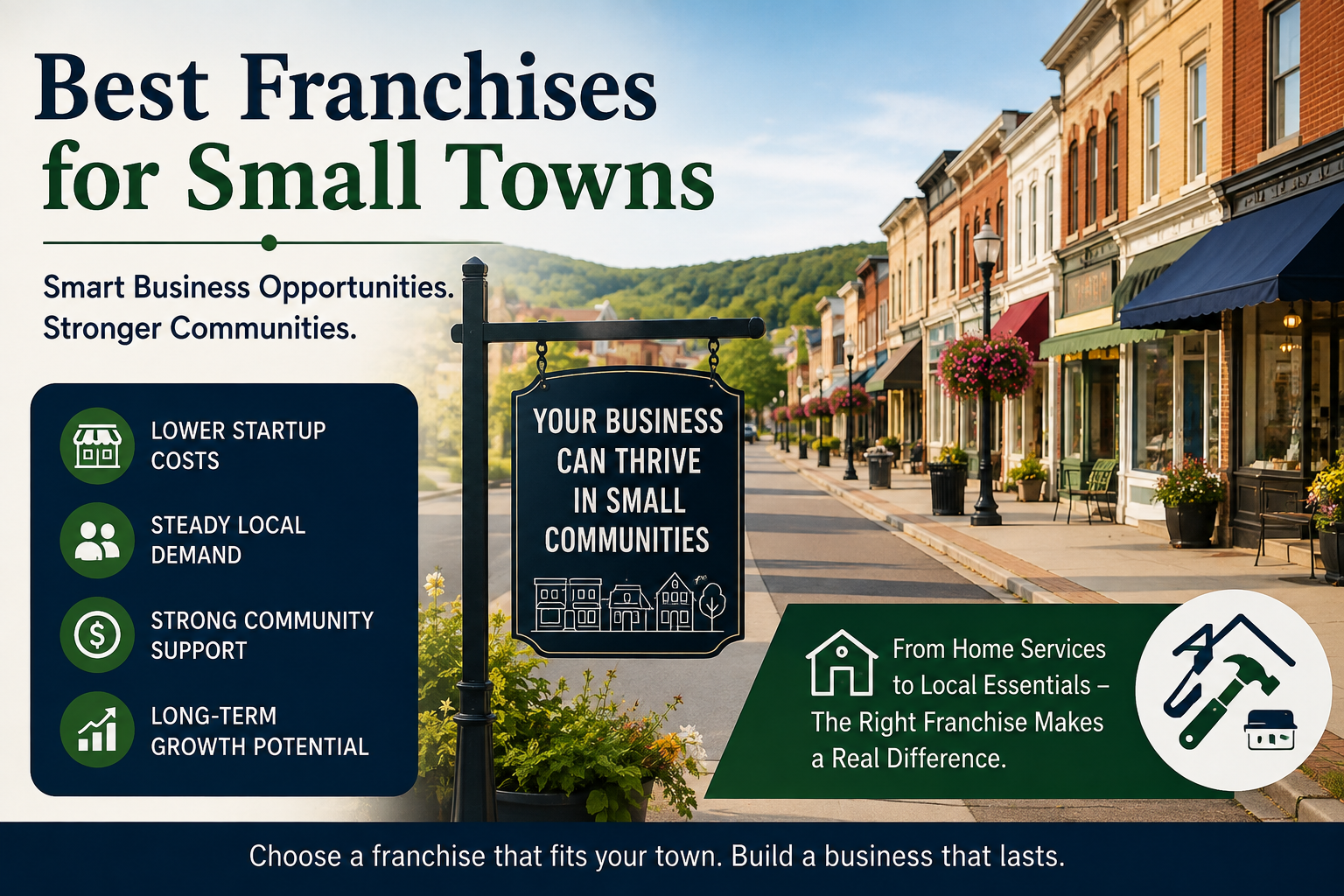
Choosing a business for a small community requires a different approach than launching one in a large city. Local customers often value convenience, reliability, personal service, and businesses that understand their community. For entrepreneurs considering a franchise, these characteristics can create opportunities that are easy to overlook in larger markets.
The best franchises for small towns are not necessarily the biggest or most recognizable brands. A successful concept should solve a genuine local problem, have manageable operating costs, and provide products or services that people need regularly. Before investing, entrepreneurs should understand the area's demographics, competition, spending patterns, and long-term growth potential.
For communities such as those found in Muskoka, local business opportunities can also be influenced by seasonal residents, tourism, property ownership, and home improvement needs. Understanding these factors can help an entrepreneur select a business model that fits the local economy rather than simply following a national trend.
What Makes a Franchise Suitable for a Small Town?
Small-town businesses often depend heavily on repeat customers and word-of-mouth recommendations. This makes reputation especially important. A franchise that provides a useful service and maintains consistent quality can gradually develop a strong customer base.
Several characteristics can make a franchise more suitable for a smaller market:
- Reasonable startup and operating costs
- Products or services with consistent demand
- Limited dependence on high foot traffic
- Strong potential for repeat business
- Flexible staffing requirements
- Simple day-to-day operations
- Services that are difficult to replace with online alternatives
- A business model that can adapt to seasonal demand
For example, professional services, property maintenance, repair businesses, cleaning companies, senior-focused services, food concepts, and home improvement services may have potential when they address an established local need.
Research Local Demand Before Investing
One of the biggest mistakes an entrepreneur can make is choosing a franchise before researching the market. A concept that performs well in a major metropolitan area may not have enough customers to support another location in a small community.
Start by identifying common problems residents experience. Are homeowners looking for reliable contractors? Is there a shortage of maintenance services? Do residents have to travel to another town for certain products or professional services?
Local research can include reviewing population trends, household income, property ownership, tourism patterns, nearby competitors, and customer reviews. Speaking with residents and local business owners can also reveal opportunities that may not appear in online market reports.
The goal is to find a gap between what people need and what is currently available.
Consider Home and Property Services
Property-related businesses can be particularly relevant in communities with a significant number of homeowners, vacation properties, rental homes, or older houses.
Homeowners frequently need services such as painting, flooring, repairs, landscaping, cleaning, storage improvements, kitchen updates, and general maintenance. These needs can create opportunities for service-based businesses that do not require a large retail storefront.
In areas where property improvement is common, home renovation Muskoka searches can also indicate the broader interest homeowners have in improving kitchens, bathrooms, storage areas, and other parts of their properties. Entrepreneurs researching this market should consider how renovation activity, seasonal occupancy, and property values may influence demand.
Evaluate Seasonal Demand Carefully
Small towns located in recreational or tourist regions can have very different business patterns throughout the year. A location may become extremely busy during summer while experiencing slower demand during winter.
That does not automatically make a business unsuitable. Instead, entrepreneurs should determine whether the franchise can operate profitably across different seasons.
Ask questions such as:
- When is the local population highest?
- Which services remain necessary during the off-season?
- Can staffing be adjusted throughout the year?
- Does the business generate recurring revenue?
- Can customers be served outside the immediate area?
- Are there commercial clients who provide year-round demand?
A business with multiple revenue streams may be better positioned to handle seasonal fluctuations.
Compare Franchise Costs With Local Revenue Potential
Franchise ownership involves more than the initial franchise fee. Entrepreneurs should calculate the complete financial picture before making a decision.
Important expenses can include equipment, lease costs, insurance, employee wages, inventory, marketing, technology, training, royalty payments, and ongoing operating expenses.
A smaller community may have lower commercial rents than a major city, but it may also have a smaller customer pool. This means revenue projections should be based on realistic local demand rather than optimistic national averages.
Create conservative financial scenarios before signing an agreement. Estimate what happens if sales are lower than expected during the first year or if operating costs increase.
Look for Businesses That Encourage Repeat Customers
Repeat business can be especially valuable in smaller communities because customer relationships often have a direct impact on long-term growth.
Services such as cleaning, maintenance, property care, personal services, food, repairs, and certain professional offerings can naturally encourage customers to return.
A business should ideally provide a clear reason for customers to choose it again. Reliable scheduling, transparent pricing, good communication, quality workmanship, and responsive customer support can turn first-time buyers into long-term customers.
In a small town, satisfied customers may also recommend a business to friends, relatives, neighbours, and coworkers. That personal recommendation can become a powerful source of organic growth.
Think Beyond the Storefront
Not every successful franchise needs a traditional retail location. Mobile and service-based models can sometimes be better suited to smaller communities.
A mobile service can travel to customers instead of waiting for customers to visit a storefront. This can reduce certain overhead costs and expand the geographic service area.
For example, a service business may be able to work across several nearby communities while maintaining a central base of operations. This approach can increase the available customer pool without requiring a large retail space.
Entrepreneurs should therefore evaluate the territory and service radius included in a franchise opportunity rather than focusing only on the population of one town.
How Home Improvement Trends Can Create Opportunities
Home improvement remains an important consideration for communities with substantial residential property. Homeowners often prefer improving an existing property rather than moving, particularly when the home has a desirable location or sentimental value.
Common projects include kitchen updates, cabinet improvements, bathroom renovations, flooring, custom storage, painting, and energy-efficiency upgrades.
This creates opportunities for businesses that help homeowners improve functionality and appearance without necessarily undertaking a complete rebuild.
When researching best franchises for small towns, entrepreneurs should therefore consider whether the local housing market creates steady demand for practical property services.
Questions to Ask Before Buying a Franchise
Before making an investment, prospective franchise owners should investigate the opportunity thoroughly.
Useful questions include:
- What is the total estimated startup investment?
- What ongoing fees must franchisees pay?
- How large is the protected territory?
- What level of local demand is required?
- How much training and operational support is provided?
- What staffing levels are normally required?
- How does the business perform during slower seasons?
- Are existing franchise locations available for comparison?
- What marketing responsibilities belong to the owner?
- How long could it realistically take to reach profitability?
It is also important to review the franchise agreement carefully and seek professional financial or legal advice before committing.
Build Around the Community, Not Just the Franchise
A franchise provides a business framework, but local execution still matters. Entrepreneurs who understand their customers can often create stronger relationships and identify additional services that fit community needs.
In a small town, being dependable can be just as important as having a large marketing budget. Businesses that communicate clearly, respect customers' time, deliver consistent quality, and participate positively in the community can establish lasting credibility.
The right opportunity should therefore balance the franchise's established system with the unique characteristics of the local market.
Final Thoughts
Finding a suitable franchise in a small town requires careful research rather than simply choosing a popular business concept. The strongest opportunities usually address practical needs, maintain manageable expenses, encourage repeat customers, and have enough flexibility to adapt to local conditions.
Home services, property maintenance, professional services, food, personal care, and other necessity-based businesses may offer potential when supported by genuine local demand. Entrepreneurs should evaluate demographics, competition, seasonal patterns, startup costs, territory restrictions, and realistic revenue expectations before investing.
Ultimately, a successful small-town business is built around solving problems for real customers. When a franchise model aligns with those needs and the local economy, it can become a sustainable part of the community rather than simply another business competing for limited attention.

 Polish
 English
 Arabic
 French
 Spanish
 Portuguese
 Deutsch
 Turkish
 Dutch
Dutch
 Italiano
 Russian
 Romaian
 Portuguese (Brazil)